Family photos are not just digital files stored in phone memory. They’re the visual legacy of your story, treasures that will gain value with each passing year. In the era of thousands of unorganized photos, the true longing is to have tangible, high-quality memories to treasure and pass down to future generations.
Recent studies show that family photographs strengthen children’s self-esteem and help them build a solid identity. Seeing images of their family reminds them they belong to something bigger than themselves. However, many families postpone sessions because they think they “don’t know how to pose” or that “it’s not the perfect time.” The reality is that the best time is now, before the kids grow another year older.
This guide will help you prepare, execute, and make the most of your family photos, from choosing the session format to how to display your memories at home. We’ll also share practical tips on outfits, natural poses, and the best locations to create authentic images you’ll treasure forever.
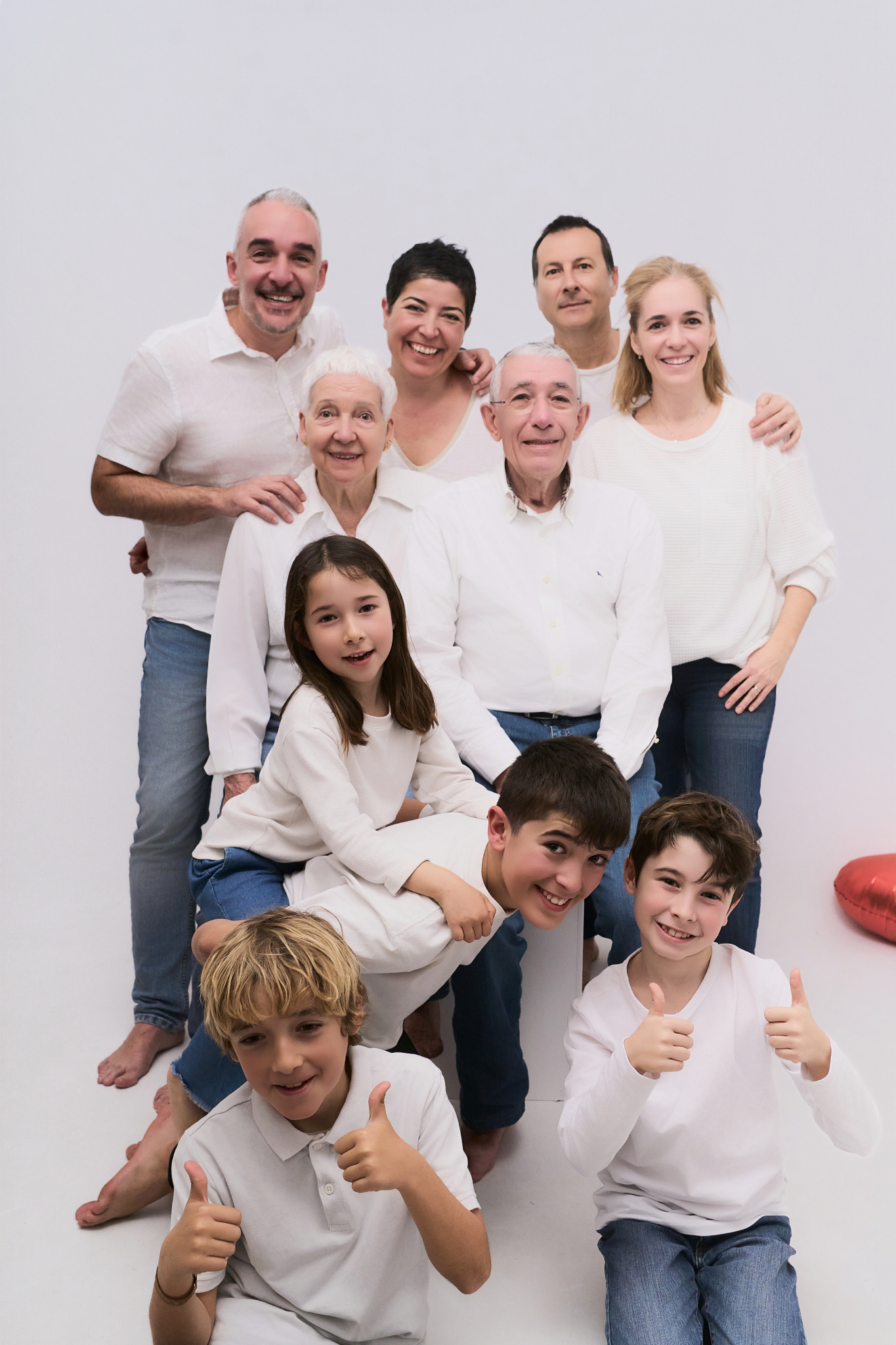
Types of family photo sessions
There are different ways to create family photos, each with its own advantages. The key is choosing the one that best fits your family’s personality and the type of memory you’re seeking.
The classic session with professional photographer
The experience with a professional photographer remains the preferred option for those seeking timeless portraits and natural elegance. At our Barcelona studio, we’ve learned that the secret isn’t in perfect poses, but in creating an environment where the family forgets about the camera.
The approach is purely lifestyle: we capture real interaction, laughter, and the unique connection that makes you special. As a photographer, my job isn’t to tell you exactly where to put your hands, but to gently guide you to relax. The best photos come when you’re yourself.
A typical session lasts between 1.5 and 2 hours, either in studio with controlled environment or outdoors. The result is a curated selection of professionally edited images, ready to print and frame. Delivery usually takes 2-3 weeks, because each photo is carefully selected. You won’t receive 400 identical photos, but gems meant to endure.
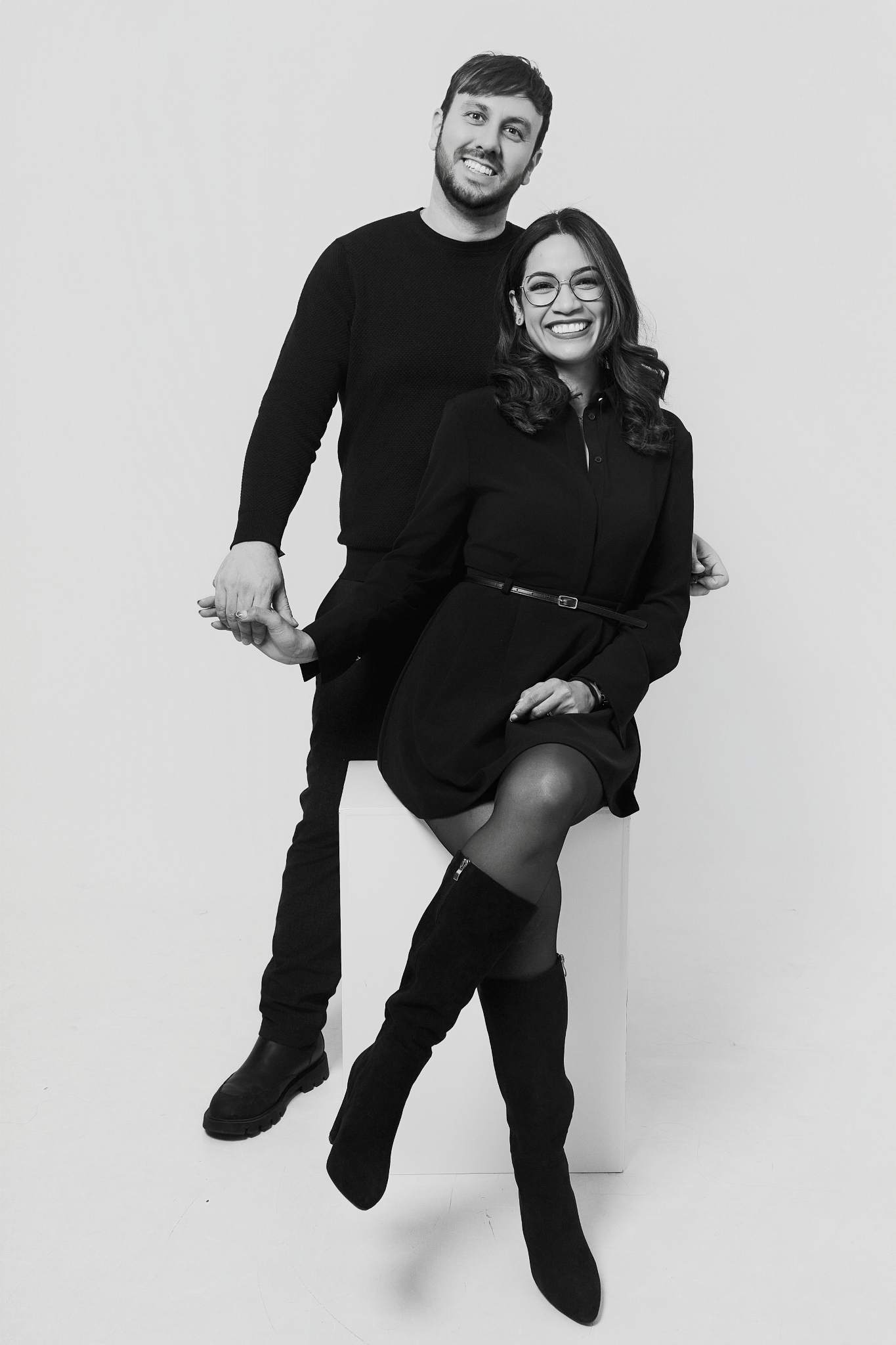
If you’re looking for elegant portraits to hang in the living room or a family album to pass from generation to generation, sessions with a professional photographer offer that level of attention and quality.
The self-photo studio: the innovative option
The self-photo studio format has revolutionized the way families create their memories, especially in cases where camera shyness is an obstacle. As pioneers of this format in Barcelona, we’ve observed how the semi-transparent mirror with hidden camera completely eliminates that barrier.
The key is that you don’t see the camera, only your reflection. This changes everything. Teenagers who normally hate photos with an adult watching relax instantly. Large families can play and experiment without feeling judged. Plus, you have total control: your music, your pace, and a remote control that lets you take as many photos as you want.
In a 40-minute session, it’s common to generate between 200 and 400 photos. Why so many? Because when you have volume, everyone ends up with images where they look good. In large groups, there’s always someone with their eyes closed in a photo, but with hundreds of options, you find the perfect one. And best of all: you receive the complete gallery the same day, ready to share.
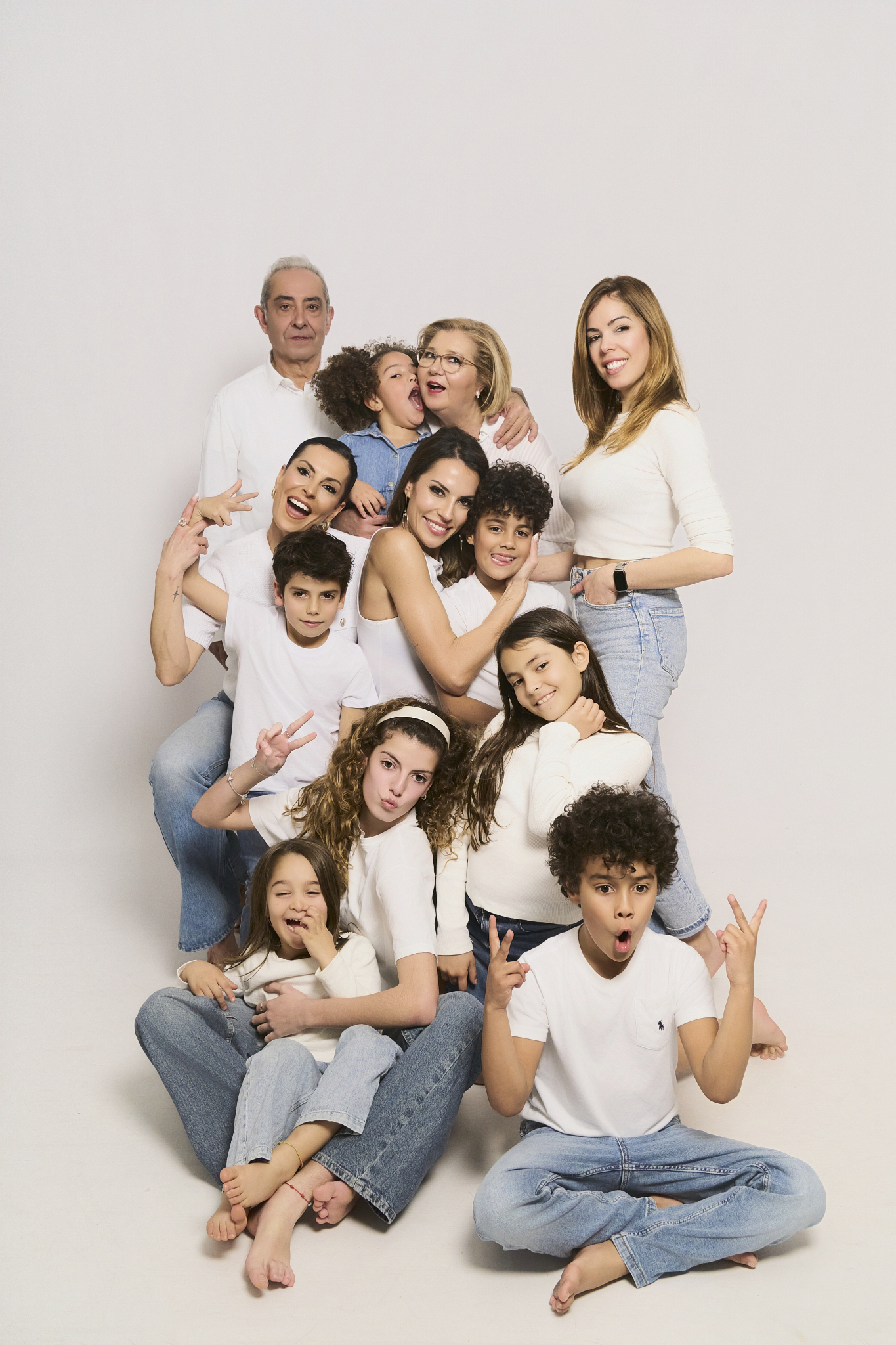
The quality is professional. We use the same equipment, lighting, and processing as in photographer sessions. The difference is only who presses the button. This format is ideal for large families (up to 12 people), teenagers, birthday celebrations, or simply for those who prefer to enjoy the experience without the pressure of a photographer watching.
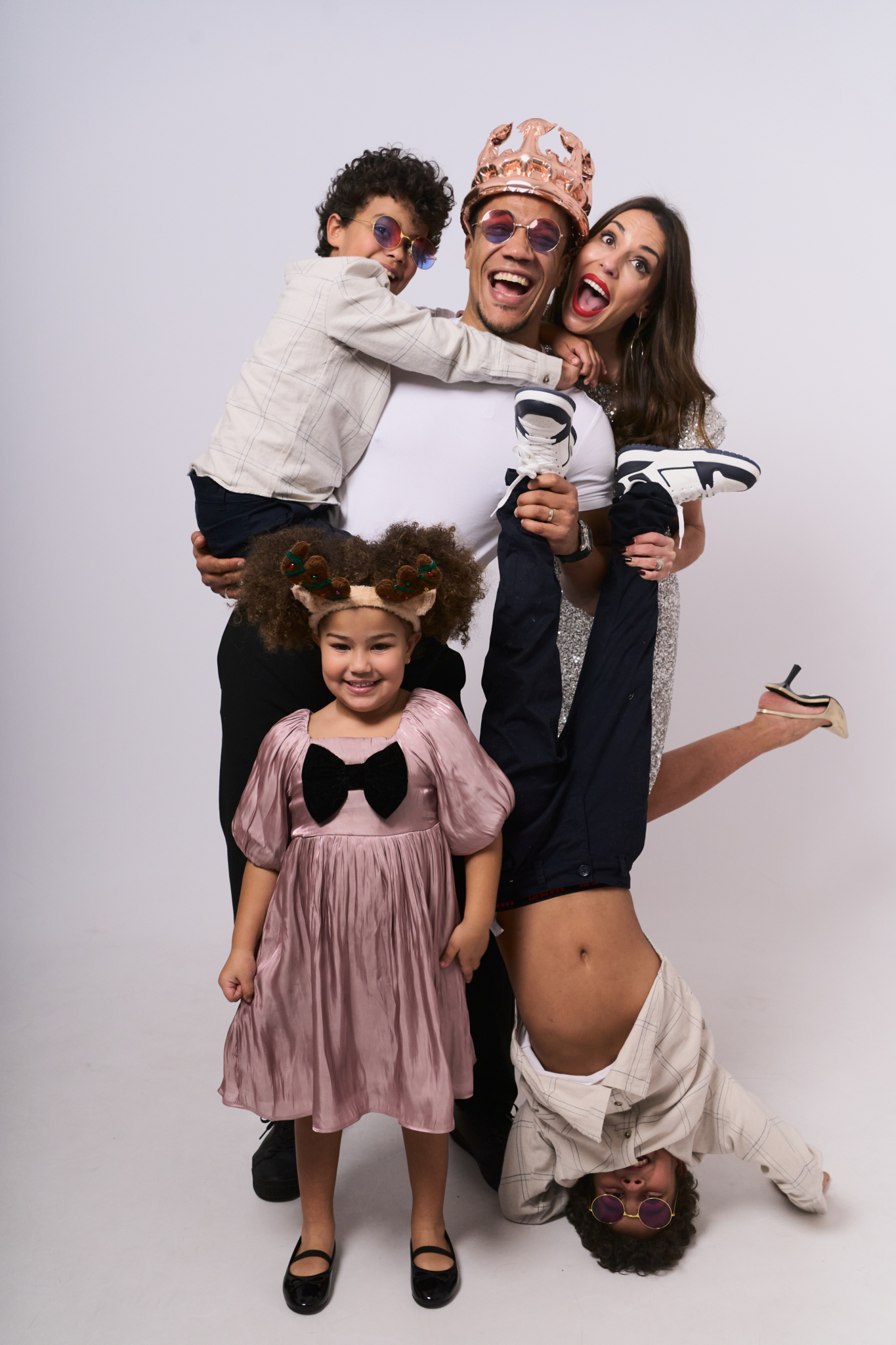
If you’re looking for an original family activity where you can create content without pressure, self-photo studios offer that freedom and spontaneity.
How to dress for family photos?
One of the most frequent questions is what clothing to choose for the session. The short answer: comfort and coordination. The long answer: we’ll explain it here.
Golden rules for coordination
Coordinating doesn’t mean dressing everyone the same. In fact, identical shirts often look forced and unnatural. Instead, opt for a palette of complementary colors that creates visual harmony without losing individuality.
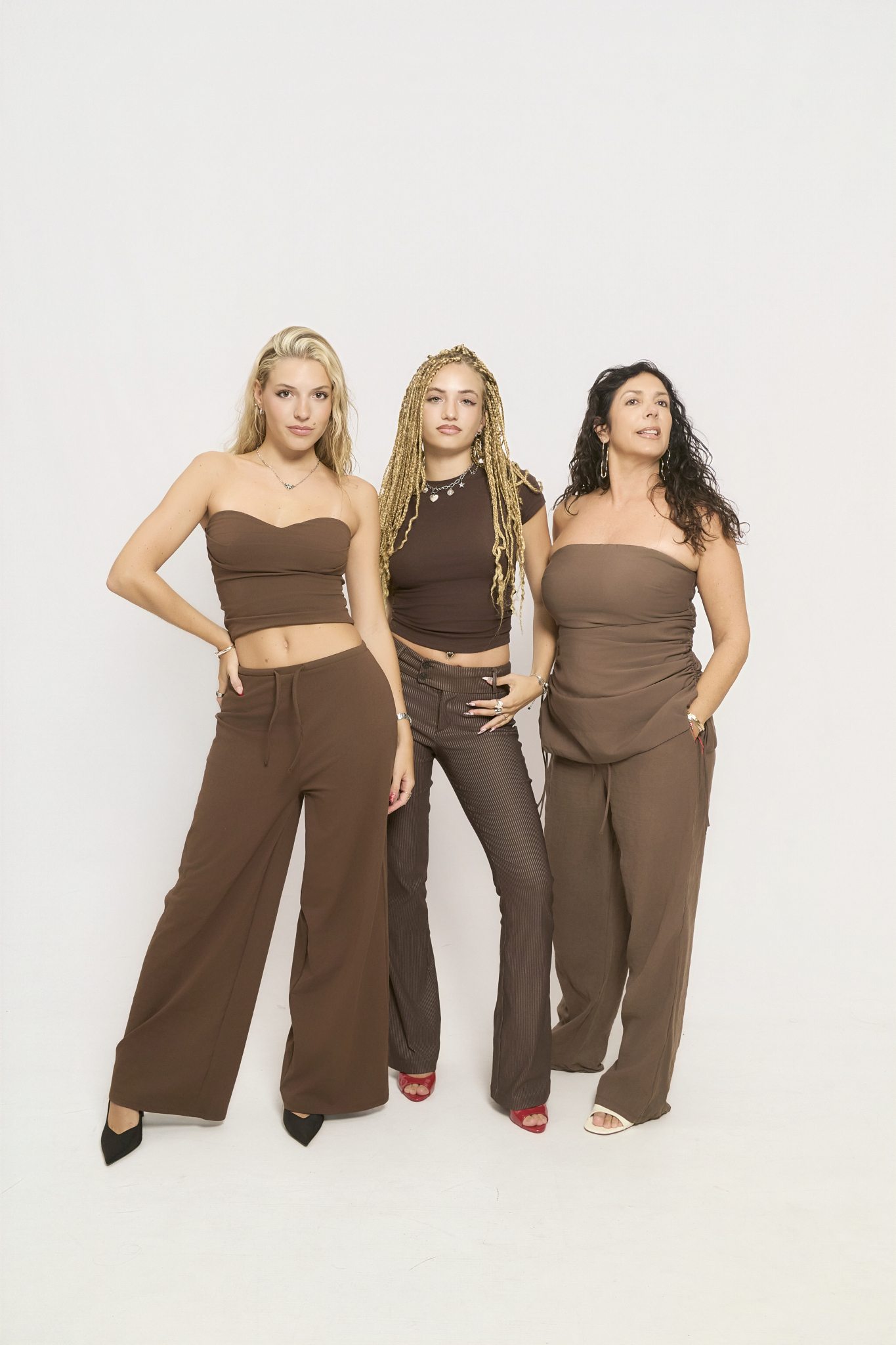
Neutral tones are your best ally. Beige, blue, brown, white, and black create a timeless aesthetic that lets the true protagonists—you—shine. Experts in wardrobe for family sessions agree: clothing shouldn’t compete with people.
Avoid large logos and very flashy patterns. Subtle prints are fine, but anything too eye-catching distracts from your faces and expressions. Also, comfort is essential. If you’re wearing tight clothing that’s uncomfortable, it will show in every photo. Well-fitted garments in natural fabrics like linen or cotton work best.
Textures and layers add visual interest without complicating. For cool days, consider coats, vests, or wool sweaters. For summer, linen in light colors is perfect. Think about how the wardrobe will adapt to the environment: earth tones for autumn, pastels for spring, whites and blues for the beach.
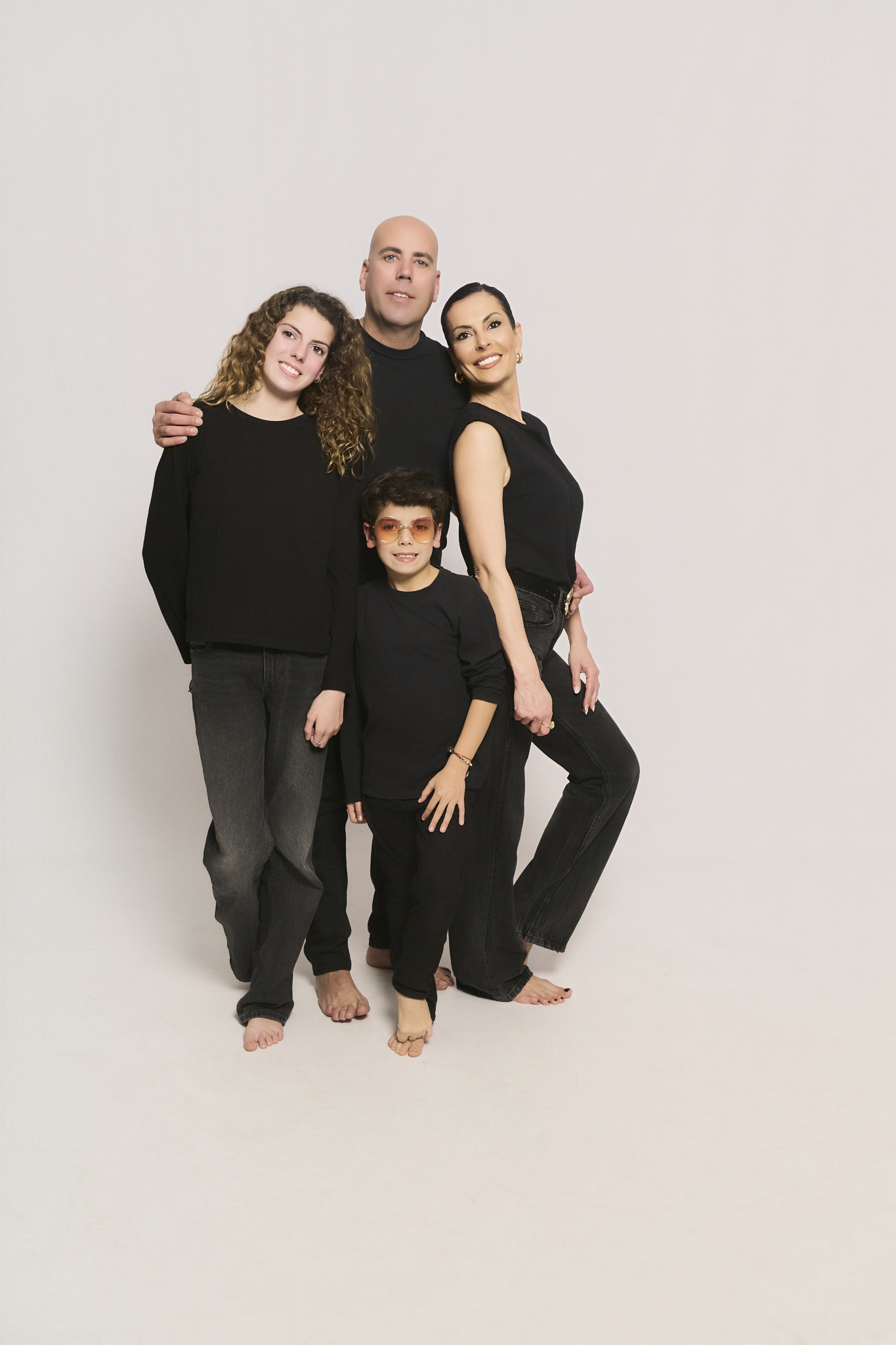
Examples of palettes by season
For outdoor sessions, adapt your palette to the natural environment. In spring, pastel tones like soft pink, light blue, beige, and mint green complement the fresh light of the season. In summer, opt for light colors, whites, and navy blue in cool fabrics that don’t absorb heat.
Autumn is the season of earth tones: terracotta, mustard, olive green, grays, and ochres create perfect harmony with the landscape. For winter, grays, navy blue, and burgundy bring elegance without competing with the soft light of the season.
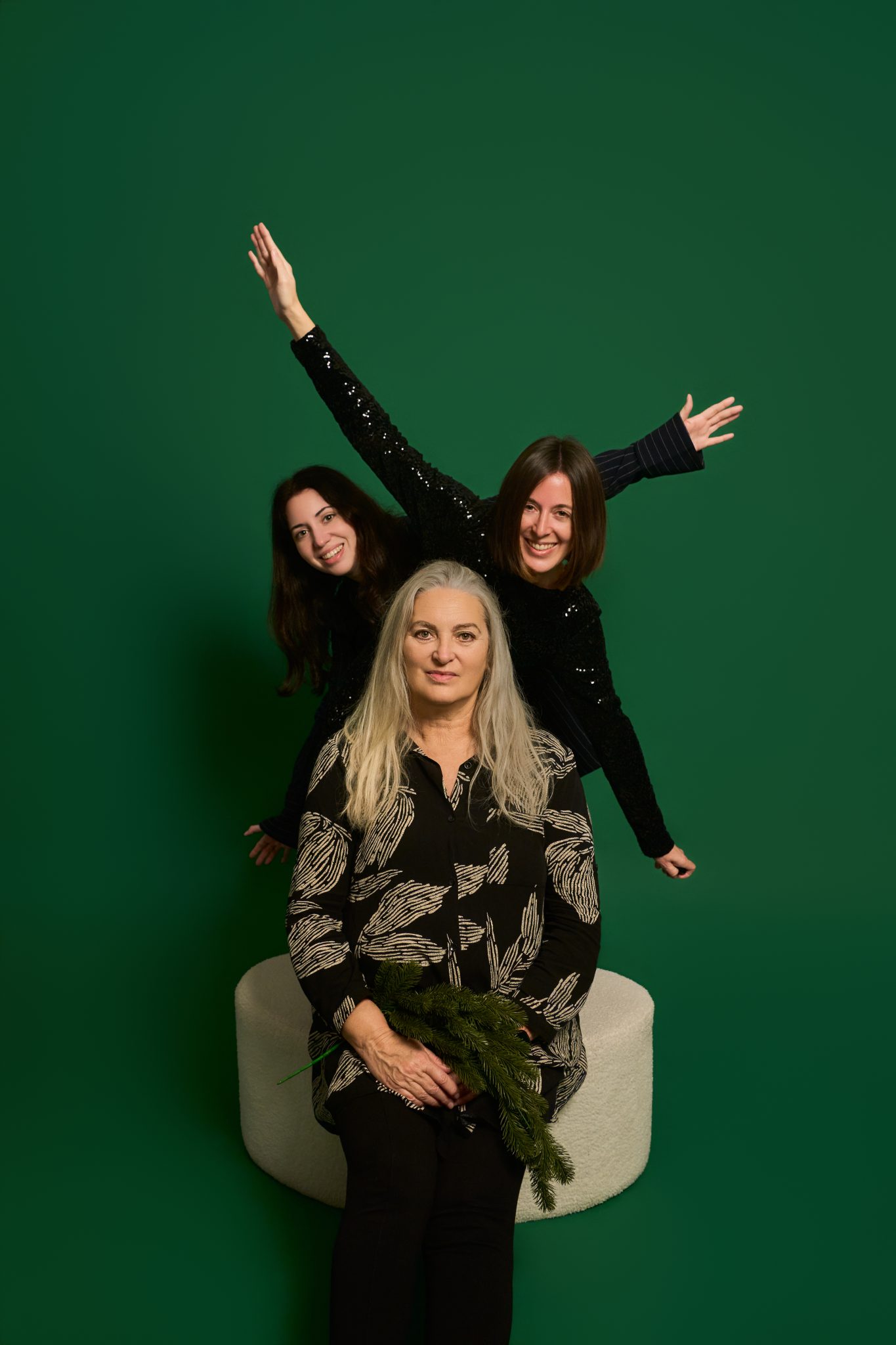
If you’re planning Christmas photos, consider red, green, gold, or white to create a cozy atmosphere. You can find more ideas in our guide to natural poses for Christmas.
Accessories and footwear
Less is more when it comes to accessories. A well-chosen hat or personalized jewelry can add character, but avoid overloading. As for footwear, choose something functional and visually appealing. For outdoor sessions where there will be movement, sneakers or flat shoes are ideal.
For more details on how to choose the perfect wardrobe, check out our complete wardrobe guide.
Ideas for creative family photos
The originality in family photos doesn’t come from copying Pinterest references, but from reflecting your own personality and connection. As a photographer, I always say: don’t look for the perfect pose, look for genuine emotion. That’s what will make your photos unique.
Ideas by season and event
Each time of year and each celebration offers different opportunities to create meaningful visual memories.
Christmas is the perfect time for photos with family warmth. Think about decorating the tree together, baking gingerbread cookies, or opening gifts in pajamas. Bokeh lights in the background add magic. If you prefer a more modern approach, a self-photo studio lets you create your own DIY Christmas card. Find more inspiration for Christmas photos.

invites beach sessions, park picnics, or simply eating ice cream together. Sunset (golden hour) offers soft, warm light that flatters everyone. Dress in linen, whites and blues, and avoid midday when shadows are harsh.
Example of family shoot at Gavà Mar beach: natural light, coordinated wardrobe in light tones, and spontaneous moments captured during golden hour.
Autumn is the favorite season of many photographers. Parks with fallen leaves, golden tones, and decorative pumpkins create a spectacular natural atmosphere. Coordinate your wardrobe in terracotta, mustard, and olive green to harmonize with the environment.
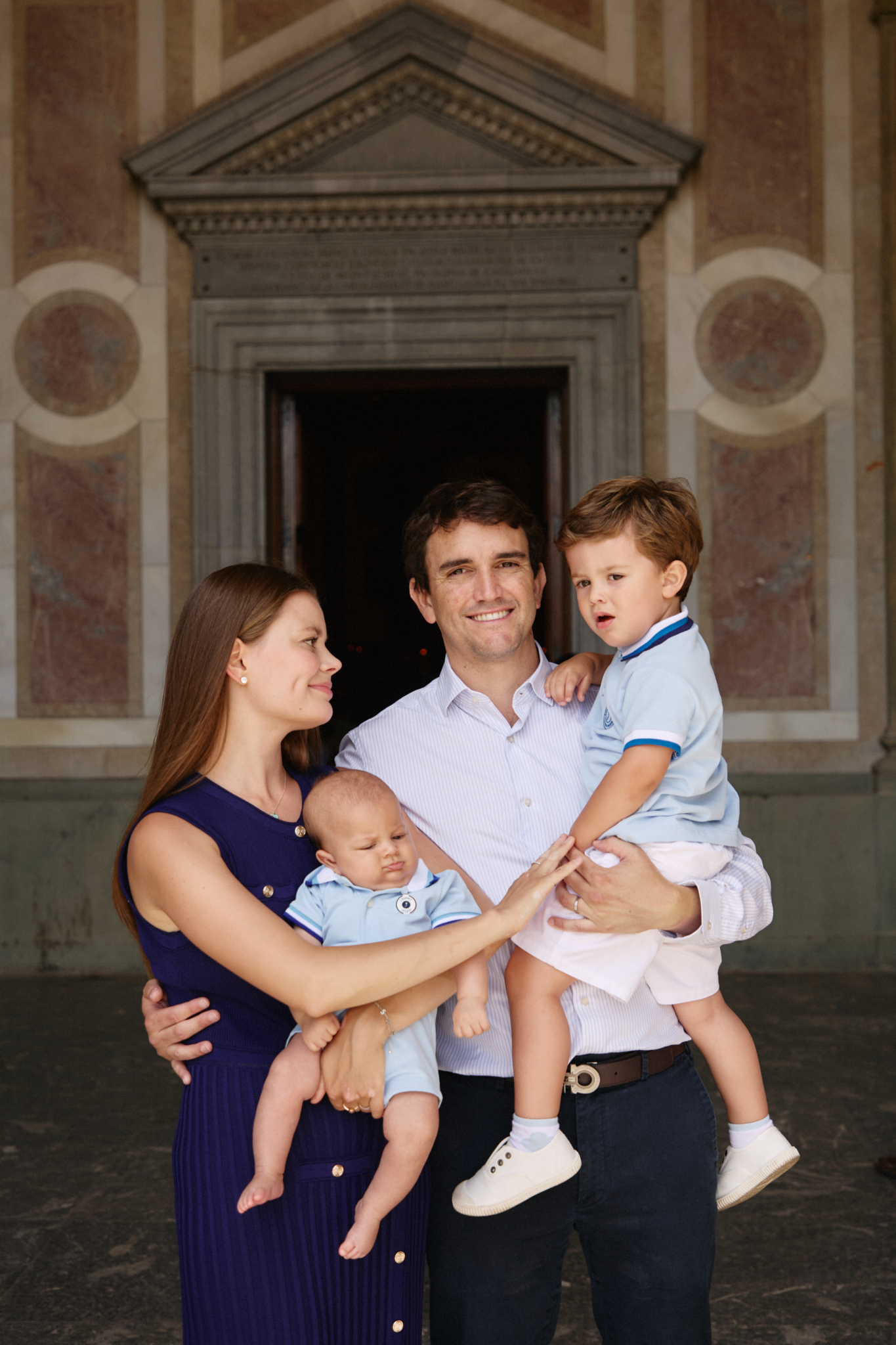
For communions, baptisms, or other religious celebrations, combine individual portraits of the protagonist with family group photos. The location can be either the studio or the church, depending on what you’re looking for.
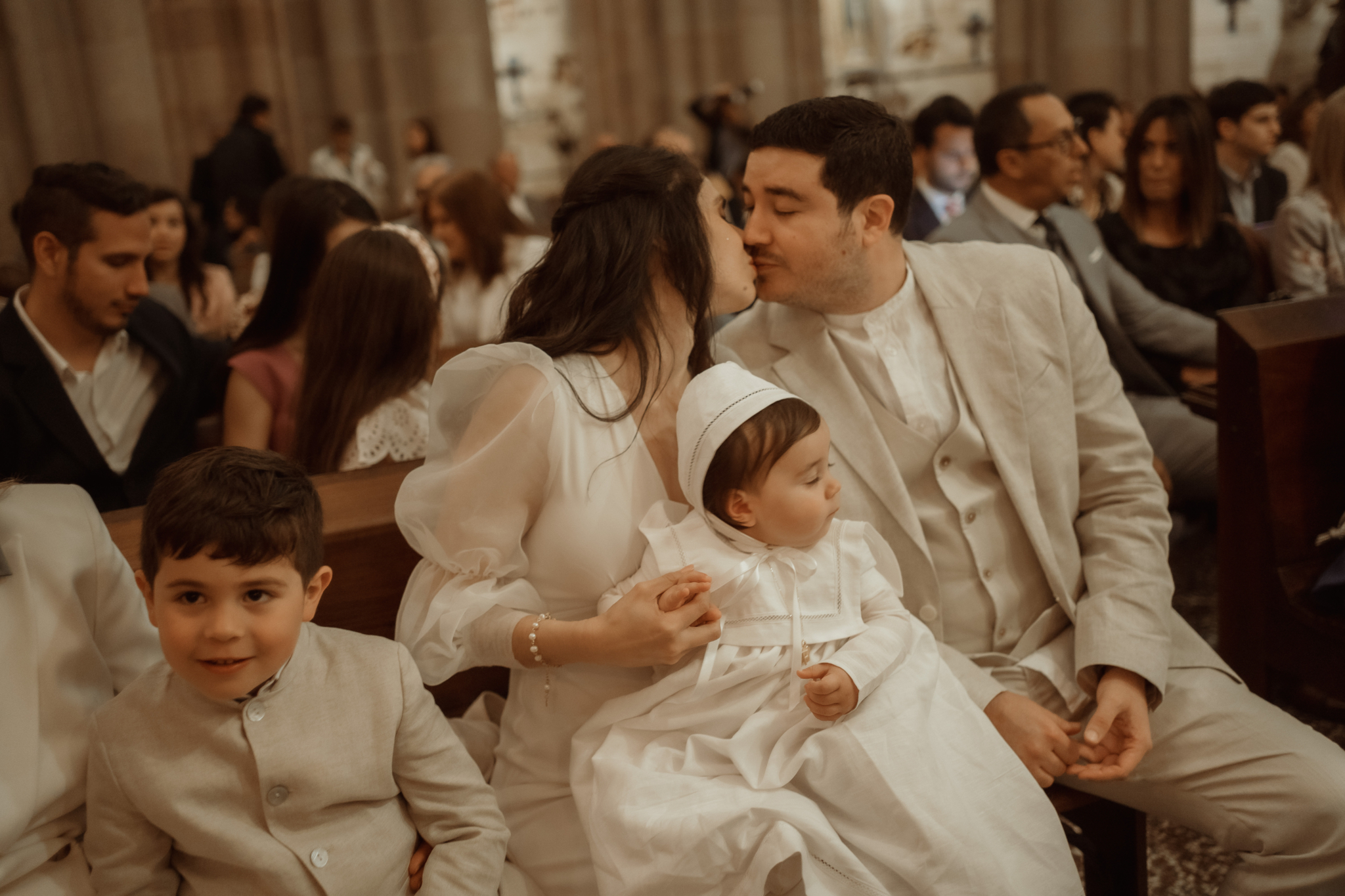
Finally, consider establishing an annual session as a family tradition. Each year, at the same time, document how your family changes and grows. Over time, these photos become an invaluable documentary legacy.
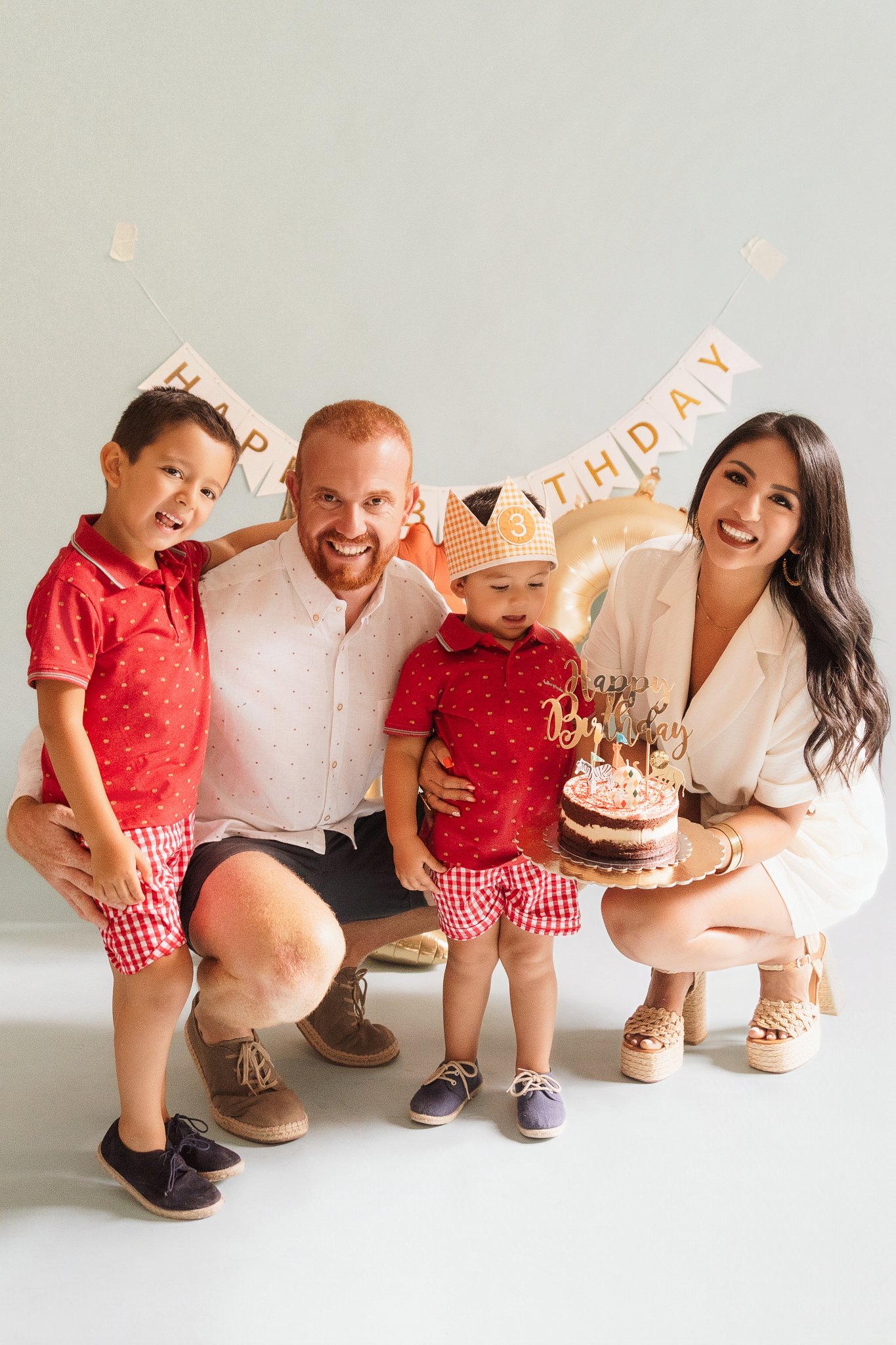
Ideas by age and composition
Different family compositions require different approaches.
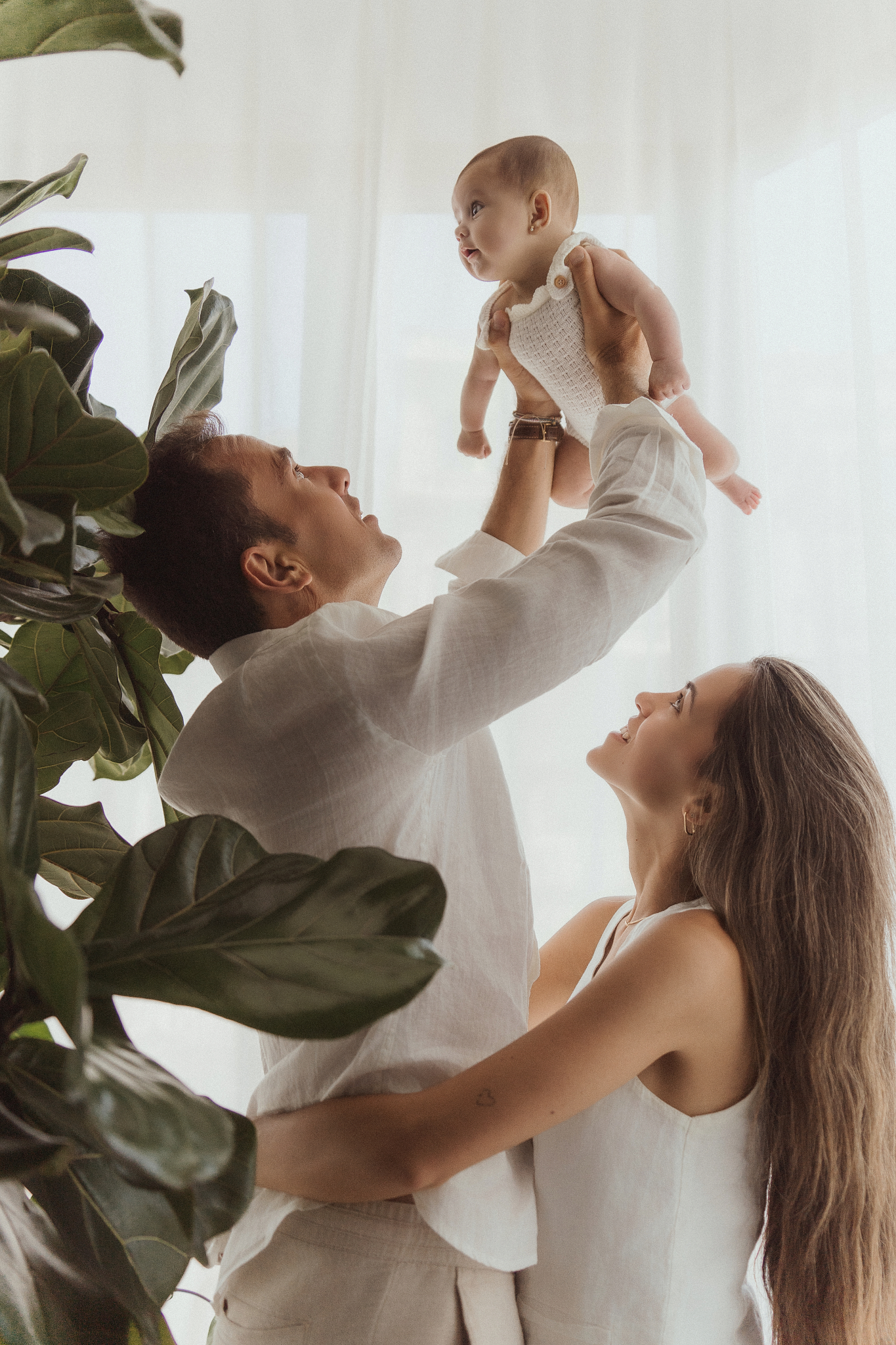
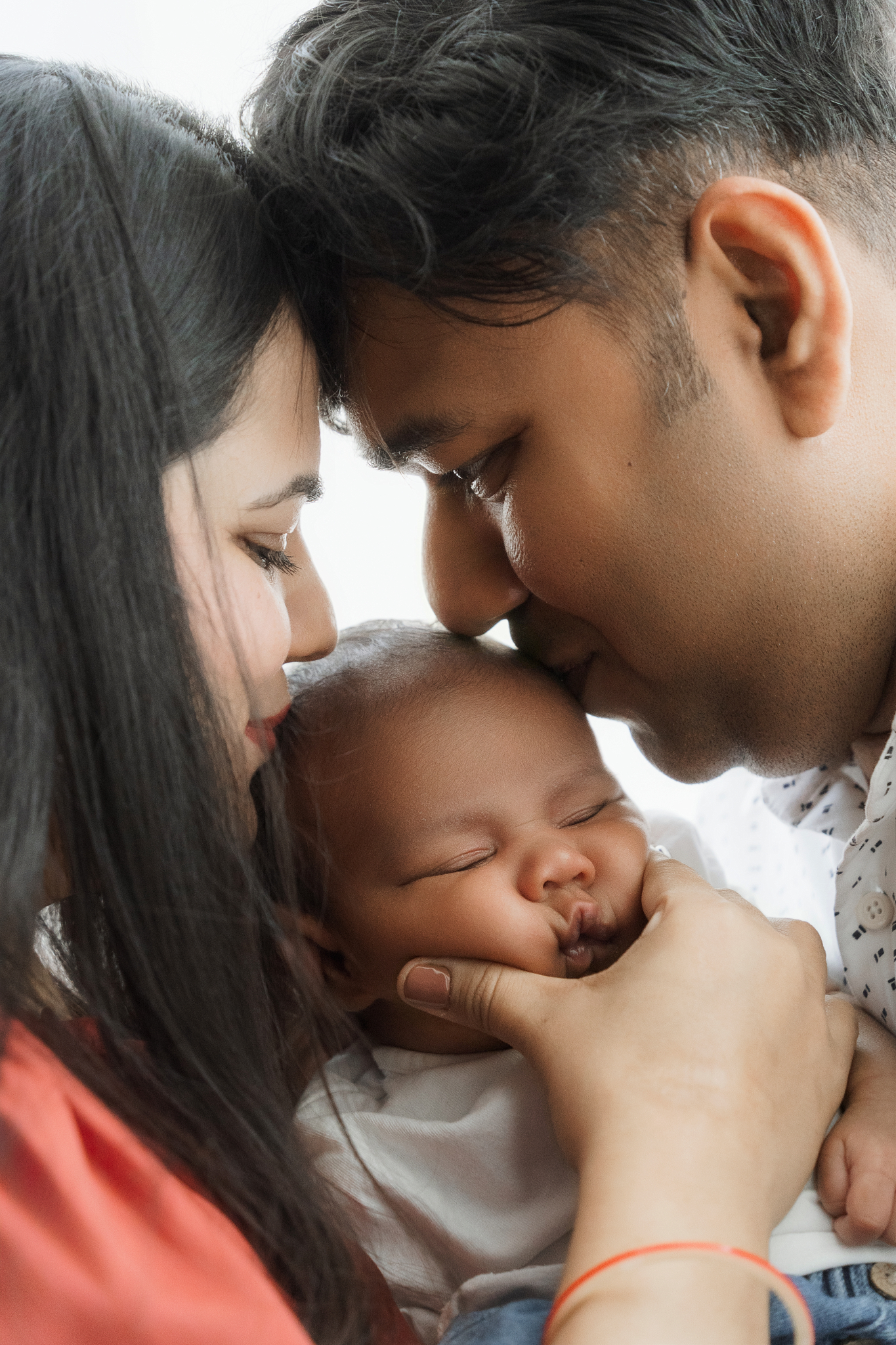
Families with babies or young children need patience and flexibility. A baby’s attention span is short, so we follow an efficient script: baby alone, mom with baby, dad with baby, and finally complete family. We work quickly but without pressure, respecting the rhythm of the youngest.
often face the challenge that teens hate “mandatory” photos. This is where the self-photo studio shines. For teenagers, having control—their music, their private space, their remote—transforms the session from an obligation to an original plan. Many discover they actually enjoy the process when there’s no adult telling them what to do.
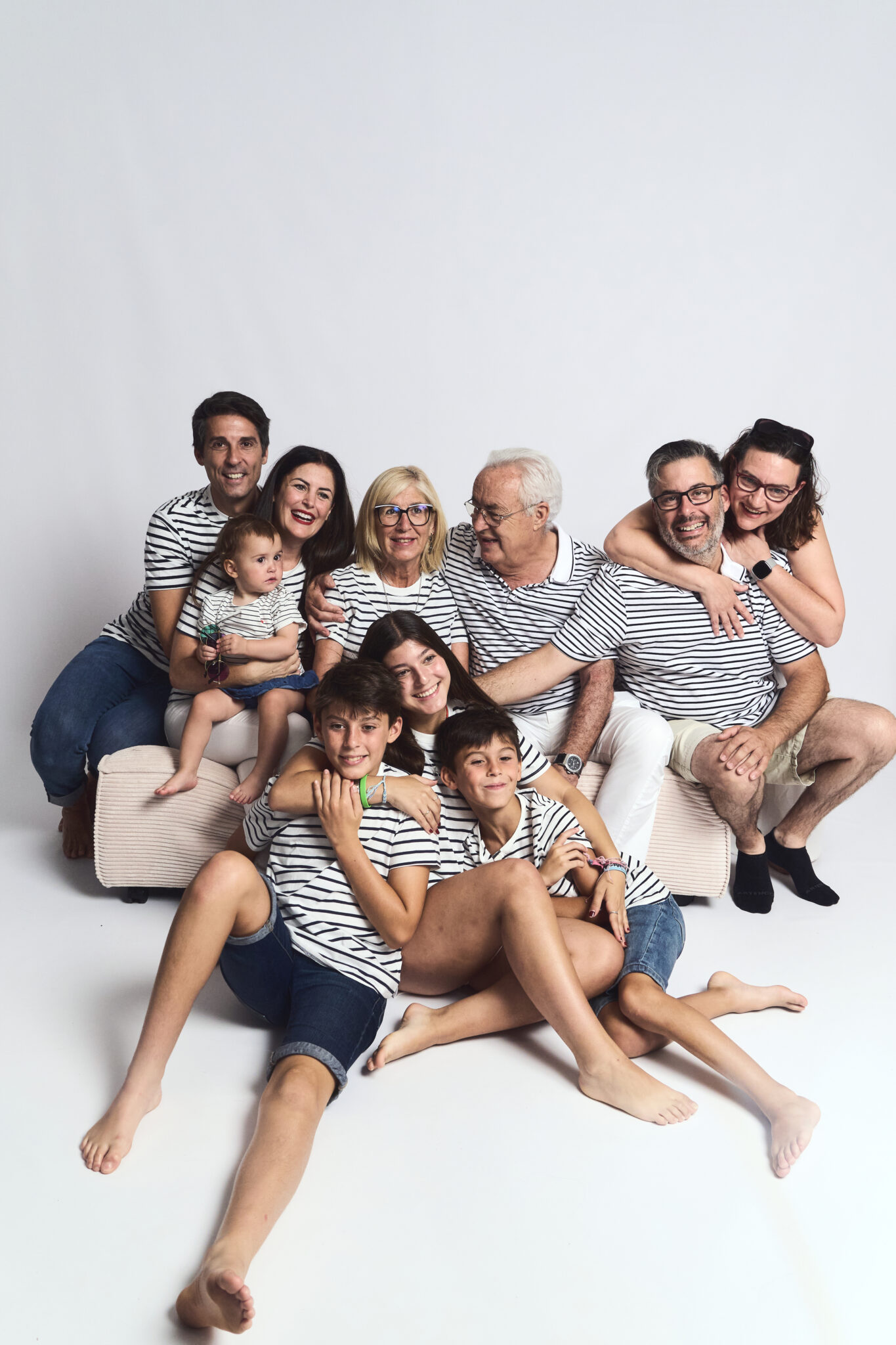
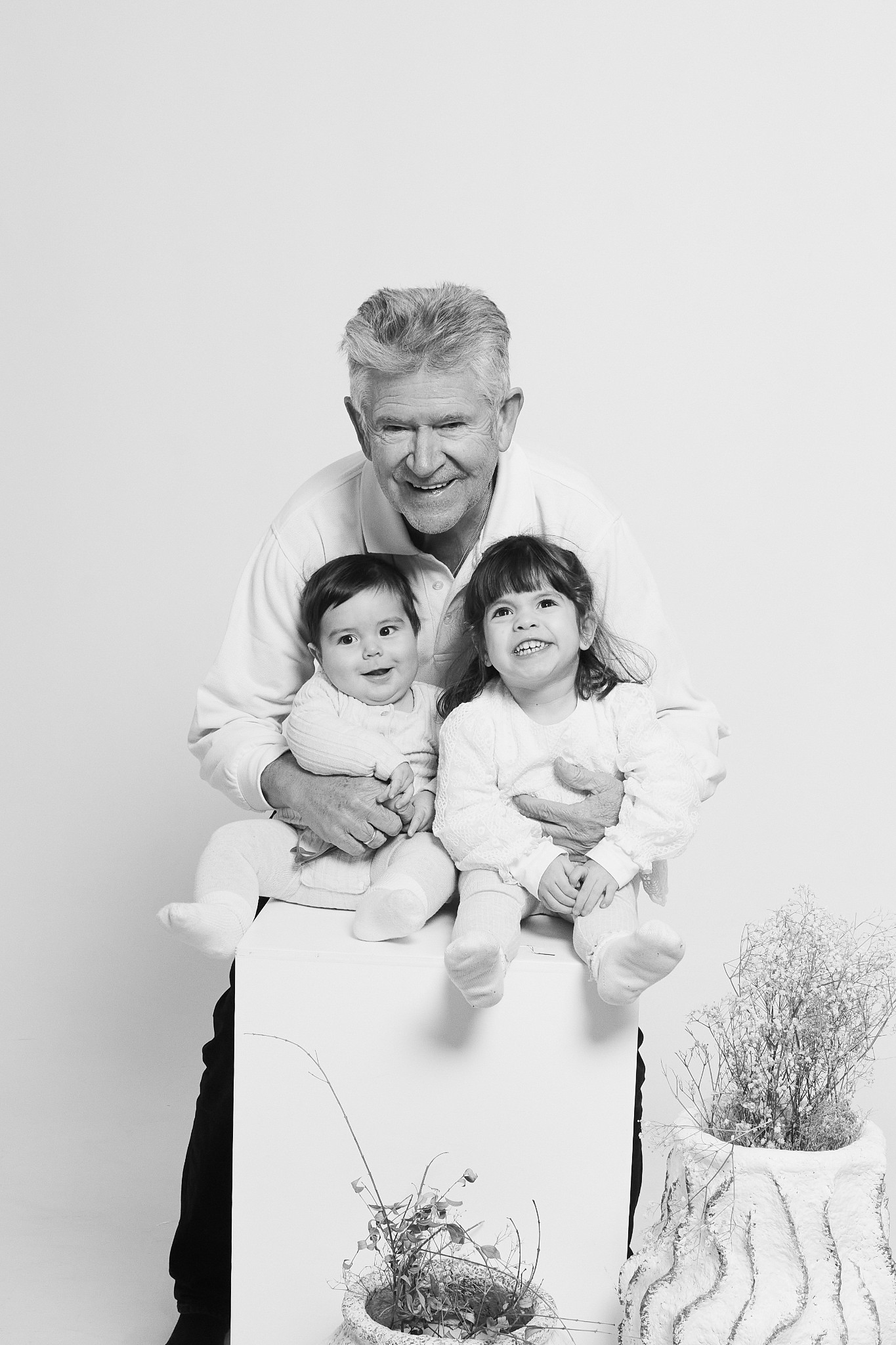
Multi-generational families with grandparents, aunts, uncles, and cousins need space and organization. The self-photo studio Grand Portrait format can accommodate up to 12 people comfortably in a 40m² space, allowing everyone to play and relax without feeling watched. It’s a wonderful way to bring several generations together in a common memory.
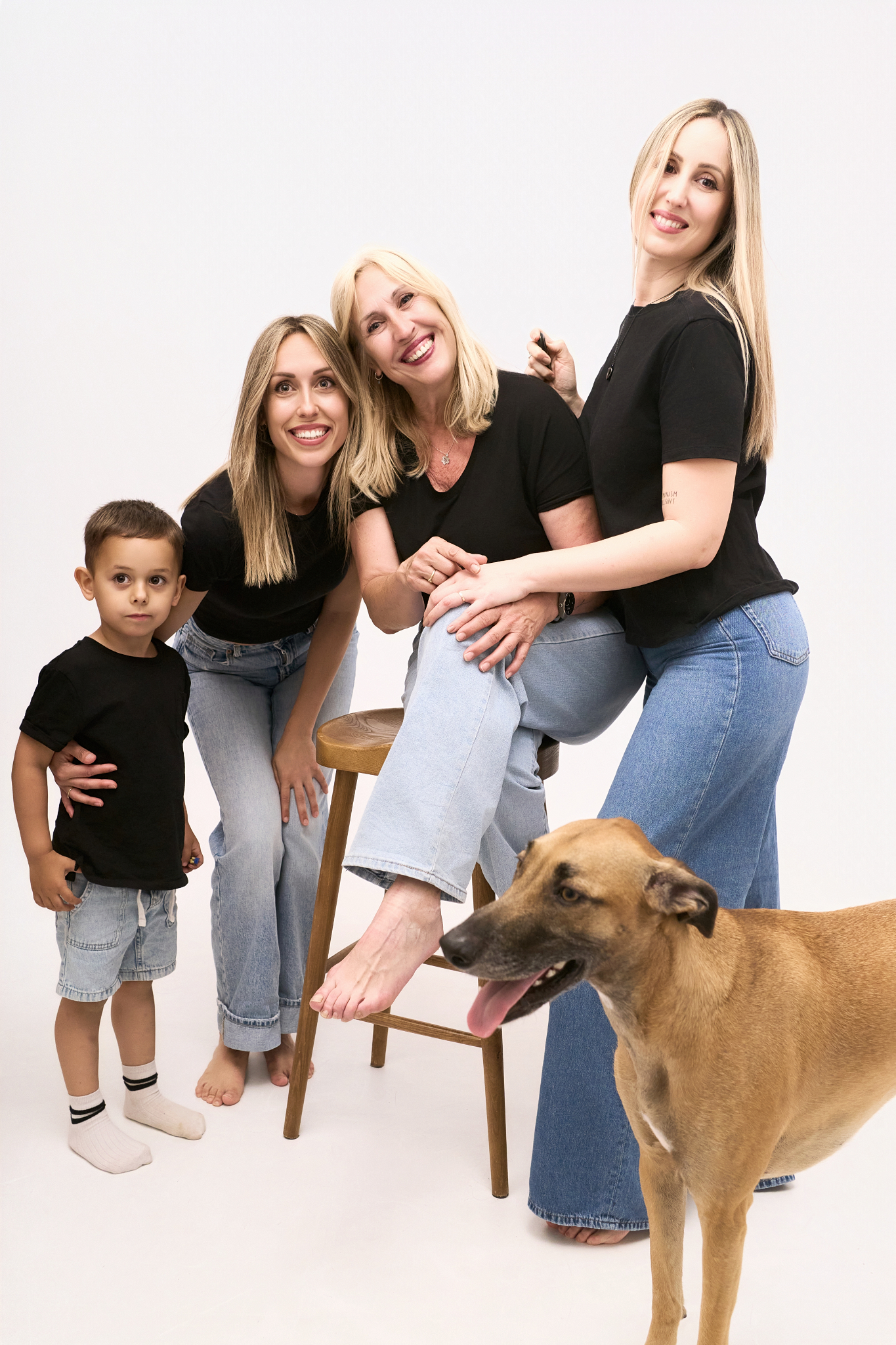
Families with pets are welcome in many modern studios. Dogs are full-fledged family members, and the best photos come when the owner interacts naturally with their pet, looking at them instead of the camera. Just make sure to clean their paws before the session.
For key moments like a pregnancy or newborn, the expert direction of a photographer is irreplaceable. However, both formats—with photographer and self-photo—are complementary. Many families combine both: photographer sessions for important milestones and self-photo for spontaneous celebrations.
Preparation, timing and locations
Good preparation minimizes stress and ensures the session flows naturally. Here’s a step-by-step practical guide.
Preparation checklist
1-2 weeks before the session: – Choose the date considering young children’s naps. A session right before naptime is a recipe for disaster. – Coordinate the wardrobe color palette with all participants. Share photos via WhatsApp to ensure everything matches. – Decide the location: studio or outdoors. Consider the weather and children’s ages. – If there are young children, prepare them by talking about “a new place with a special tree and toys,” not “a photo session.” Promise a reward afterward (ice cream, park, etc.).
On the day of the session: – Bring extra change of clothes for kids. Accidents happen. – Pack snacks and water to avoid bad moods from hunger or thirst. – If you’re going to a self-photo studio, think about the music you want to hear. The right playlist creates the perfect atmosphere. – For babies, remember: the session goes at the baby’s pace, not the clock’s. There’s no rush.
Strategic timing
Optimal timing is crucial for both light quality and family mood.
For outdoor sessions, golden hour (1-2 hours before sunset) offers soft, warm, flattering light. Avoid midday at all costs; harsh shadows under the eyes and dazzling light don’t flatter anyone.
For newborn sessions, the ideal period is between 7 and 21 days old, when the baby still sleeps deeply. Sessions usually last 2 to 2.5 hours, with breaks for feeding and diaper changes. As a photographer, I always say: the session is paced by the family, not the clock.
If you opt for studio with controlled professional lighting, you have total independence from weather and time of day. This flexibility is especially valuable in winter or on rainy days when outdoor sessions are impossible.
Iconic locations in Barcelona
While this guide is designed for families in any city, we share some Barcelona locations as reference. If you live in another city, look for local equivalents: parks with good natural light, quiet beaches, or urban centers with interesting architecture.
In Barcelona, Parc de la Ciutadella offers varied backgrounds: lake, waterfall, wide green areas. The best time is early morning, before the crowds arrive. It’s near metro L1 Arc de Triomf.
Montjuïc provides stunning city views and spectacular gardens like the Jardins Mossèn Costa i Llobera or the Teatre Grec. It’s ideal for older children who can walk up the slopes.
Barceloneta is perfect for beach sunsets. Dress in linen and fresh fabrics, and plan for sunset. Keep in mind that in summer it’s very crowded.
The Gothic Quarter or Gràcia offer historic architecture and colorful streets with an authentic local touch. Plaça del Rei in the Gothic Quarter and Plaça del Sol in Gràcia are popular spots.
Finally, studios in central Barcelona like Wonderstory (50m from Plaza Catalunya) offer easy access by public transport, nearby parking, and total control over light and weather. It’s the perfect option for rainy days or when you prefer a controlled environment.
Natural vs. stiff poses
The central principle of modern family photos is authenticity over perfection. Almost all parents, especially mothers, start by saying: “I don’t know how to pose.” My answer is always the same: it’s normal, and it’s precisely my job to make you forget about the camera.
The secret: real interaction, not catalog poses
The focus isn’t on poses, but on gentle guidance. I create an atmosphere where the family forgets the camera and simply interacts. Movement is a great ally: walking together, dancing, moving slightly. This helps relax and tension disappears.
Instead of giving orders (“put your hand here”), I use “prompts” that provoke genuine reactions: – “Tell mom a joke.” – “Group hug, everyone squeeze tight.” – “Whisper something funny in each other’s ear.”
Genuine laughter beats any forced smile. Furthermore, the most emotional photos are often those where the family doesn’t look at the camera, but interacts with each other: looking at each other, laughing, hugging. These authentic moments captured naturally are what truly move you years later.
Poses and composition by group size
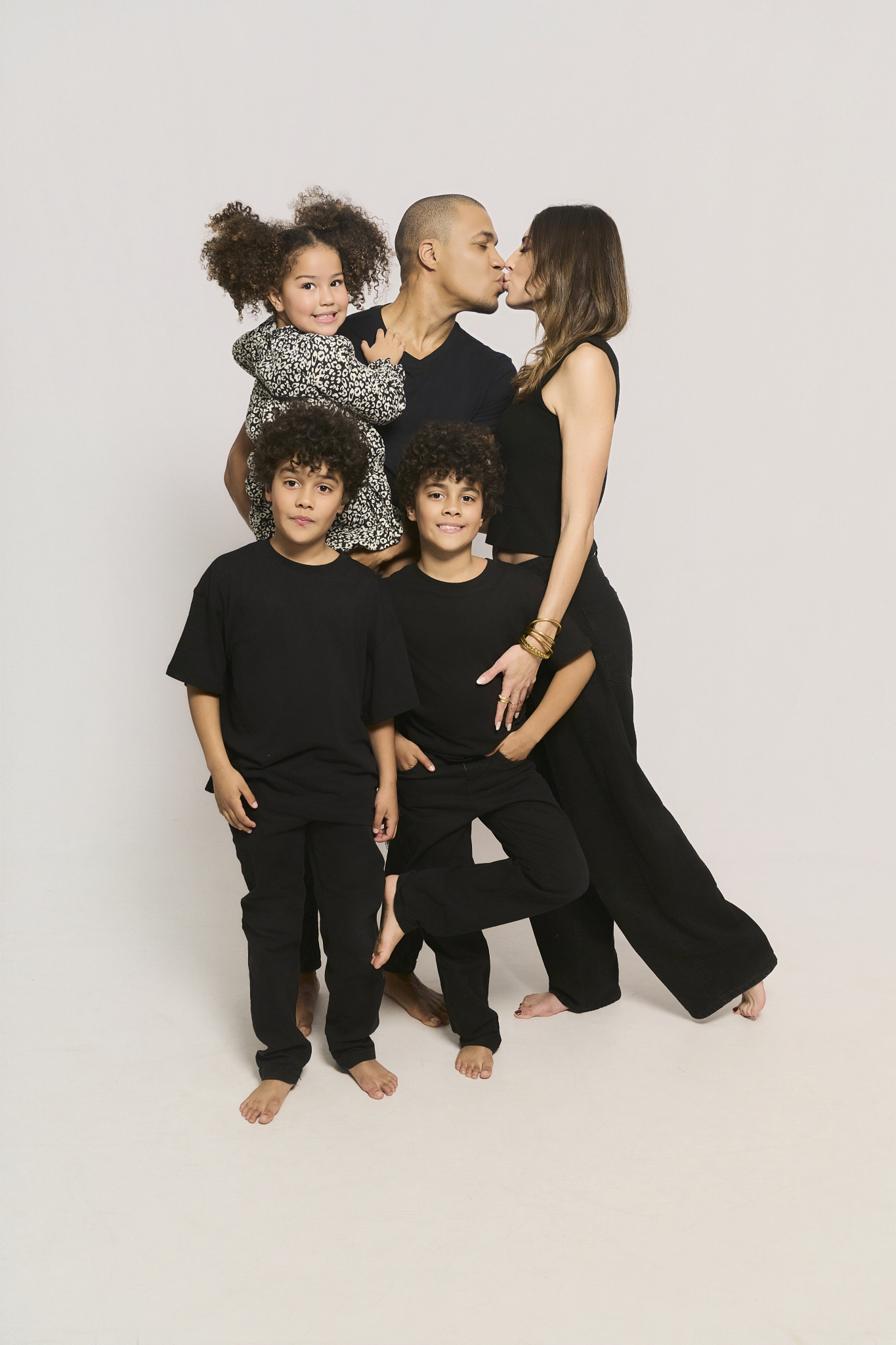
For nuclear families (3-4 people), “triangle” composition creates visual balance. Alternate levels: parents sitting with children playing standing, or everyone walking together for candid photos.
For medium groups (5-7 people), use different levels taking advantage of steps, slopes, or simply seating some and leaving others standing. Make sure everyone is visible. Group hugs looking toward the center of the circle create intimacy.
For large groups or multi-generational families (8+ people), photographer sessions require careful planning. However, the self-photo studio Grand Portrait format can accommodate up to 12 people comfortably, allowing everyone to experiment without the complexity of coordinating poses for so many people.
The spontaneity of the self-photo studio
The mirror technology makes spontaneity flow naturally. The client can try a thousand poses without feeling they’re wasting time or the photographer’s patience. The key is to play, laugh, and be yourself with the remote in hand.
Kids see the mirror as a game. They make faces, dance, experiment. There’s no need to say “smile” because they’re already genuinely smiling. Without the pressure of a photographer watching, the experience becomes fun instead of stressful.
Where to place family photos in the home?
The real value of family photos is in turning them into a visible legacy that decorates your home and tells your story. Don’t let them stay only in the cloud or phone memory.
Ideas for home decoration
1. Gallery wall: Mix different sizes and frames to create a focal point in the living room. It’s an effective way to show your family’s evolution over time. Experts in photo decoration recommend maintaining a 5-7 cm space between frames for a harmonious result.
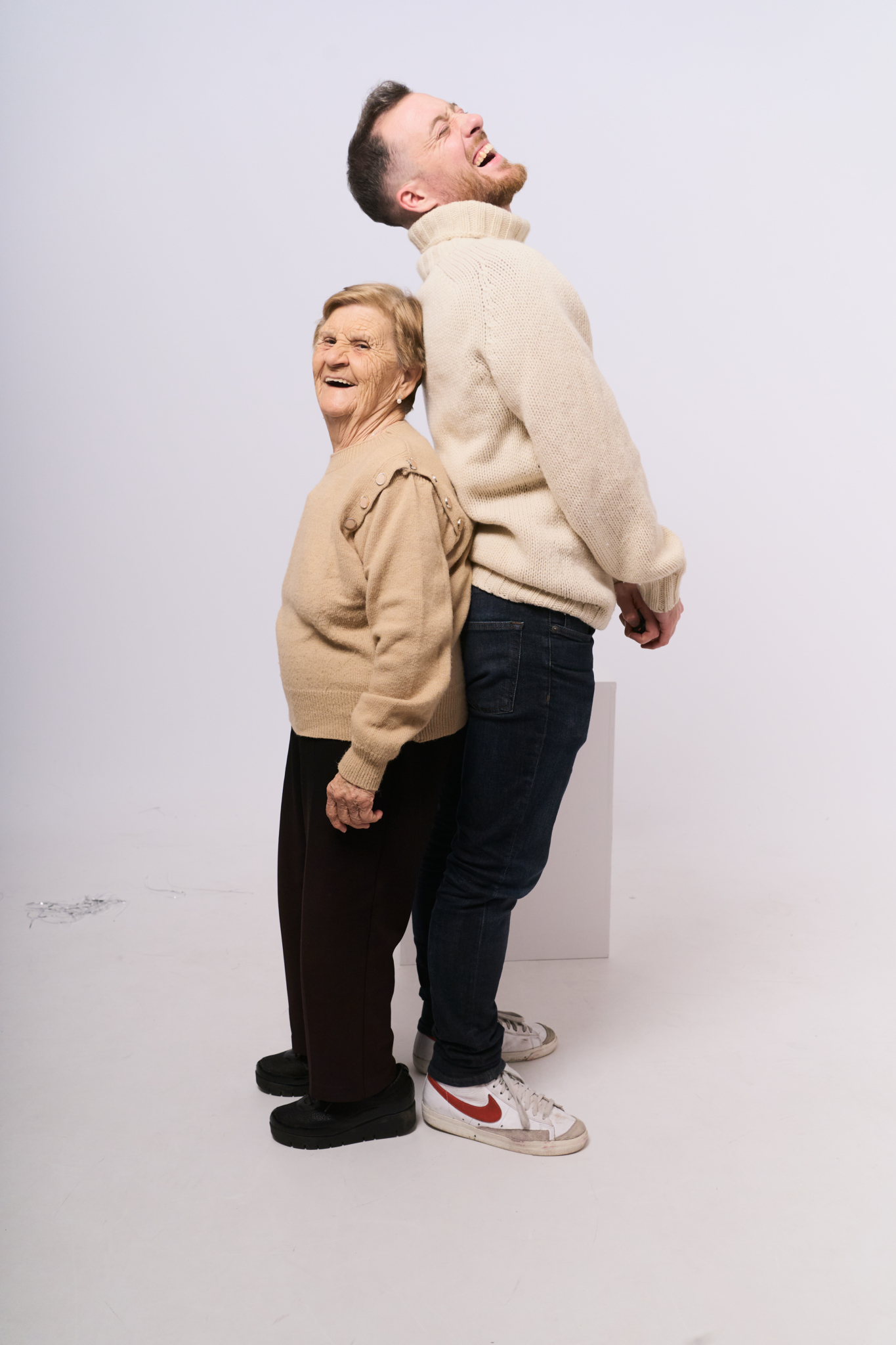
Use a hallway or staircase to display photos in chronological order. It’s a beautiful way to visualize how your children have grown and how the family has evolved.
3. Statement piece: Choose a spectacular family photo and print it in large format: canvas or acrylic. Place it above the sofa or fireplace as the focal point of the living room. In the future, we’d like to offer quality large canvases for this purpose.
4. Photo ledges: Allows easy rotation without having to make new holes in the wall. You can mix photos with other decorative objects. IKEA-style shelves are perfect for this.
5. Digital frames: For grandparents or your own home, a digital frame with automatic slideshow allows you to display hundreds of rotating photos. It’s especially useful if you have a self-photo session with hundreds of images.
Recommended vs. avoid spaces
Ideal spaces: – Living room: perfect for achievement and celebration photos – Dining room: family photos reinforce bonds during meals – Hallways between rooms: take advantage of transition spaces – Home office: adds warmth to work spaces
Spaces to avoid: – Master bedroom: it’s an intimate space only for those who sleep there – Bathroom: humidity deteriorates photos and can create a feeling of being watched – Kitchen: grease, heat and splashes damage images – Main entrance: too many family photos can overwhelm guests
The key principle is moderation. Too many photos can undermine the decoration instead of enriching it.
What to do with files after the session
1. Backup and organization: Implement a triple backup system: cloud, external hard drive and physical copies. Organize by year and event. If you did a self-photo session, you receive the complete gallery (200-400 photos) the same day. If it was with a photographer, you’ll receive a curated selection professionally edited in 2-3 weeks.
2. Prints and albums: Printed photos become special objects in the digital age. Albums you can touch and feel are a tangible legacy. In the future, our goal is to offer album design services and high-quality prints. If you did a self-photo session, choose your favorites for instant printing.
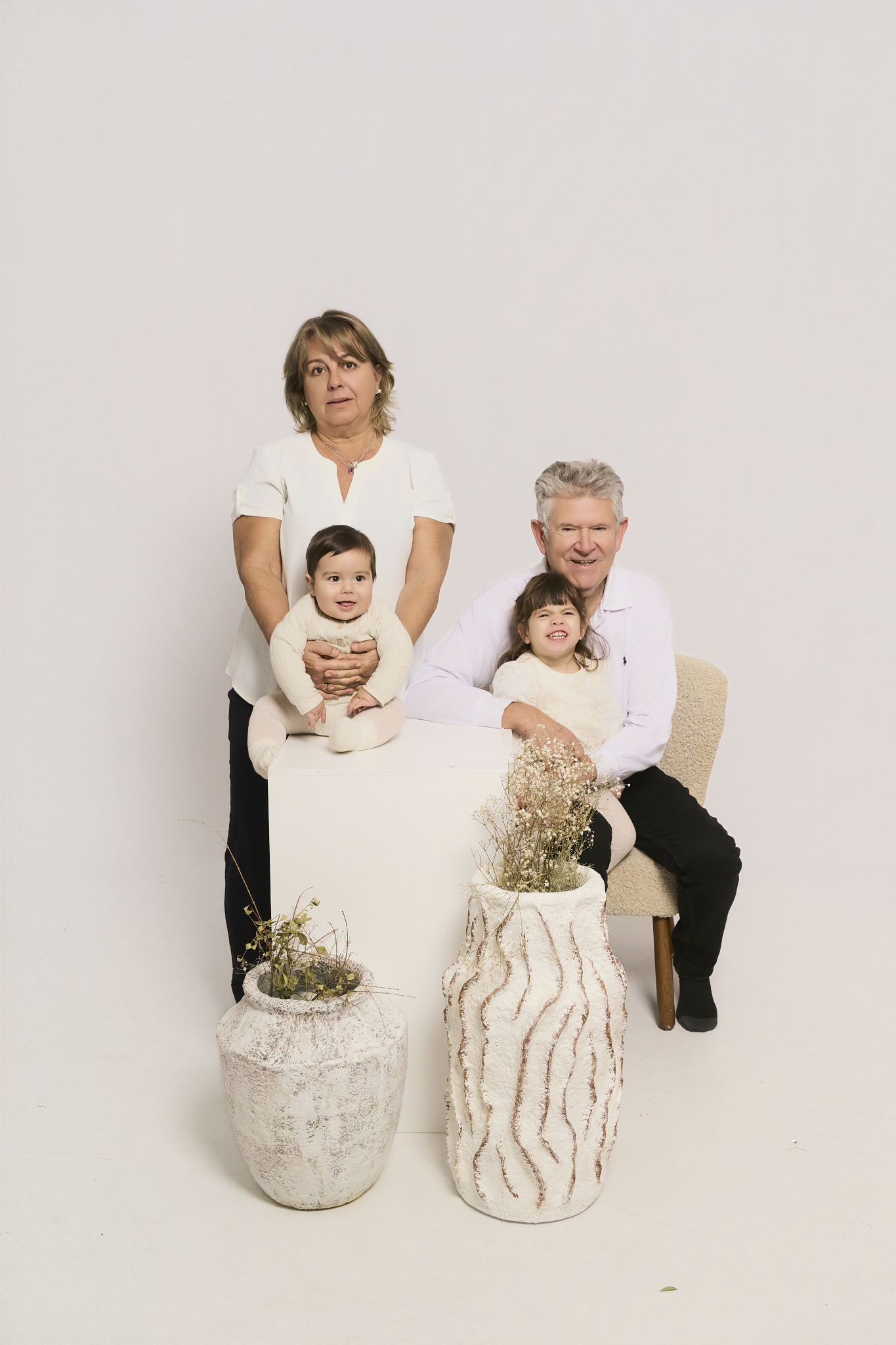
A photo printed on canvas or a designed album has high sentimental value. It’s the perfect gift for grandparents or godparents. You can also gift the experience itself: a gift card for a photo session is a gift that’s enjoyed and whose memories endure.
Create your family visual legacy
Creating a visual legacy for your family is one of the best investments you can make. It’s not just about beautiful images, but about building an emotional archive that your children will treasure when they’re adults and that their children will know when you’re no longer here.
Two paths to that memory
Guided and elegant experience with professional photographer: If you’re looking for timeless portraits, expert guidance from the first minute, and someone to capture the essence of your connection without you having to worry about anything, photographer sessions offer that level of personalized attention. You receive a curated collection of professionally edited images, designed to print and preserve for generations.
Fun and free experience with self-photo studio: If you prioritize spontaneity, want hundreds of photos (200-400+) to choose from, prefer an activity without the pressure of a photographer watching, or are looking for the perfect plan for a birthday or celebration, the self-photo studio format offers that freedom. You control the pace, music, and timing of each photo. It’s an experience that both children and adults genuinely enjoy.
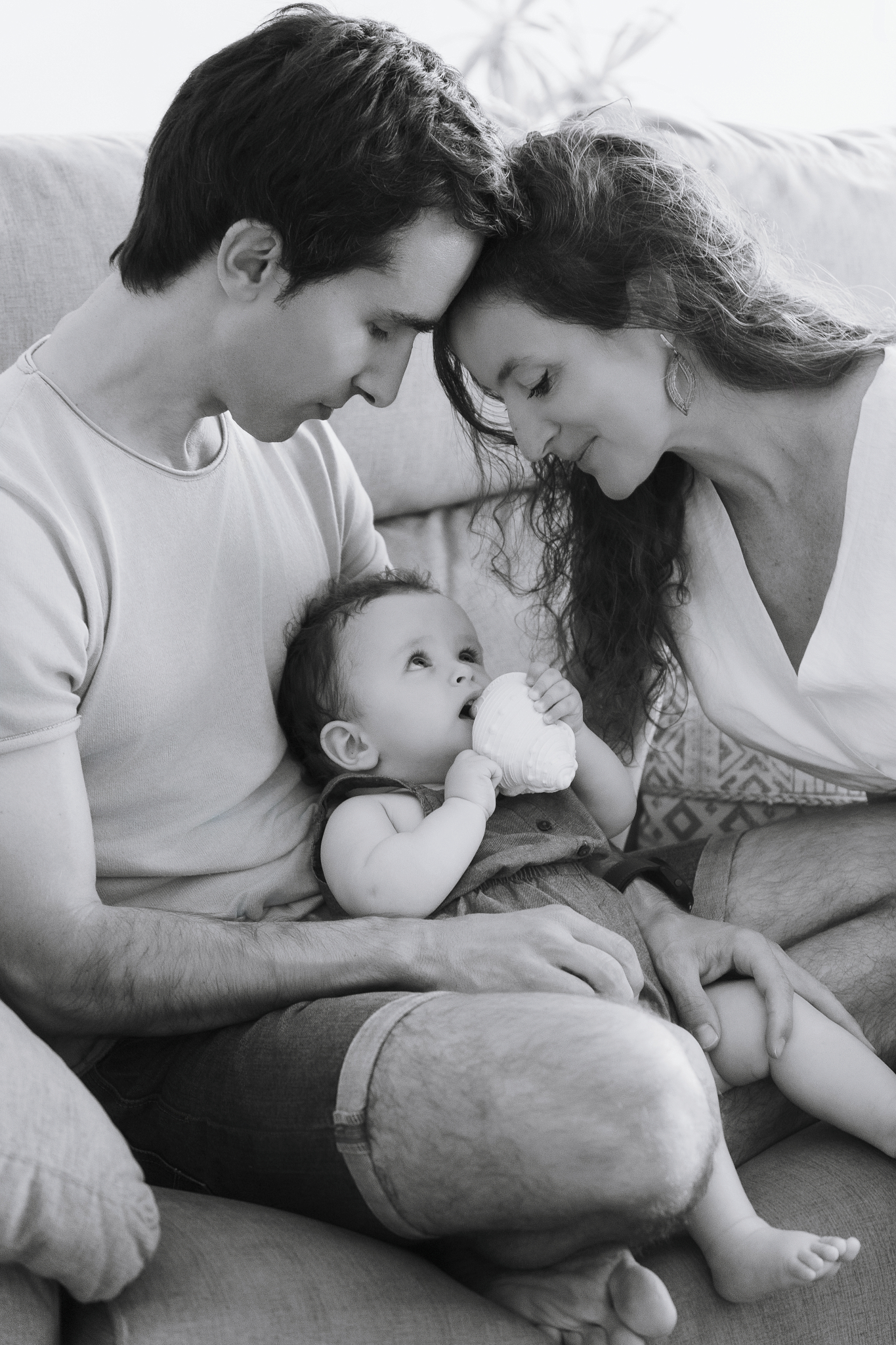
Both formats are complementary, not mutually exclusive. Many families combine both over the years: photographer sessions for important milestones like pregnancies and newborns, and self-photo for spontaneous celebrations and large family gatherings.
Don’t let your memories stay only in your mind. Family photos are more than images: they’re the thread that connects generations, the mirror where your children will see where they come from, and the tangible legacy of the love you share today.
Frequently Asked Questions (FAQ)
How to dress for family photos?
The key is to coordinate, not dress everyone the same. Choose a palette of complementary colors with neutral tones as a base (beige, blue, white, black). Avoid large logos and very flashy patterns. Comfort is essential: if you wear uncomfortable clothing, it will show in the photos. Adapt textures to the season: linen for summer, wool for winter.
Where to place family photos in the home?
The best spaces are the living room, dining room and hallways. Create a gallery wall mixing sizes and frames, or choose a spectacular large-format photo as a centerpiece above the sofa. Avoid the master bedroom, bathroom and kitchen (humidity and grease deteriorate photos). The key principle is moderation: too many can undermine the decoration.
What’s the best time of year for family photos?
Spring and autumn offer soft light and pleasant temperatures for outdoor sessions. However, the best time is simply to do it. Don’t wait for the “perfect” moment that never comes. Your children grow fast, and family photos capture a moment that won’t return. Each season has its charm: take advantage of autumn’s golden light, spring’s freshness, or Christmas’s festive warmth.
What if my children don’t cooperate during photos?
It’s completely normal. Children have short attention spans. Plan the session considering their naps and meals. Bring snacks and water. Don’t tell them “we’re going to a photo session,” but “we’re going to a special place.” Many photographers use games and fun prompts (“tell mom a joke”) instead of stiff poses. The self-photo format also works well because children see the mirror as a game.
Do we need to know how to pose?
Not at all! The modern philosophy of family photos is authenticity over forced poses. The best photographers don’t ask you to “pose,” but create situations where you interact naturally with your family. Movement helps: walking together, hugging, whispering something funny. The most emotional photos are those where the family looks at each other instead of the camera. The best photos come when you’re yourselves.
How much does a professional family photo session cost?
Prices vary depending on the photographer, location and what the package includes. A professional photographer session can cost between 150-400€ and includes the session, editing and a curated selection of photos. Alternatively, self-photo studios usually cost between 60-100€ and give you all the photos taken (200-400 images) the same day. Consider this an investment in memories that will last generations.