

What to wear for a pregnancy photoshoot: decide by format
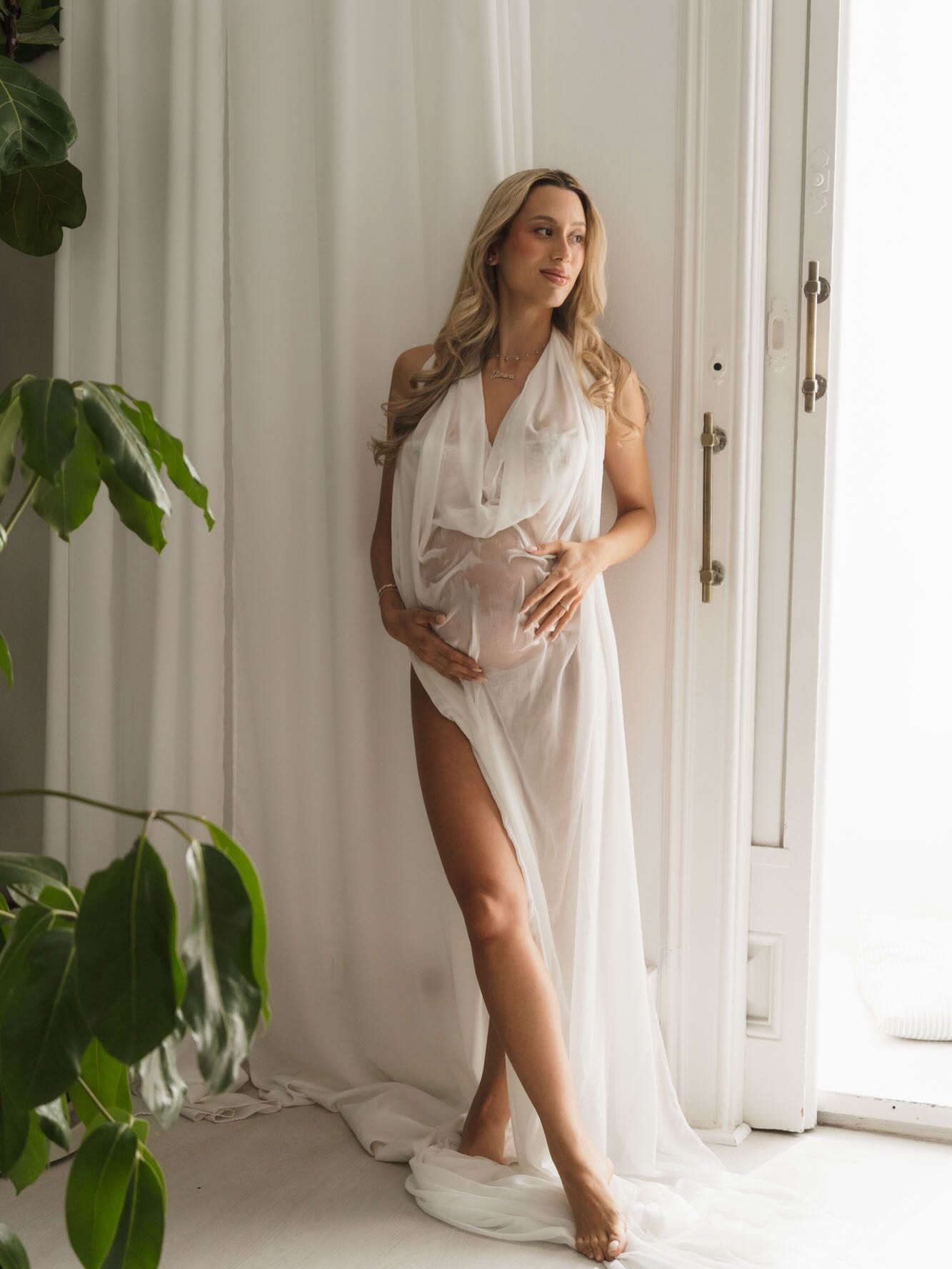
The question I get the most the week before a session at my studio in central Barcelona is always the same: what to wear for a maternity photoshoot so the bump shows but I don't look weird. And almost always, behind the practical question, there's a heavier one.
"Everyone talks about acceptance, body positivity, loving yourself the way you are… But you're pregnant and you just can't. You don't like what you see. You don't feel like you. And on top of that, you feel bad for feeling that way. I've been there too." — Tami (Wonderstory)
That's why the first decision isn't the dress. It's the format.
Quick answer: Clothes for a maternity photoshoot aren't picked by fashion — they're picked by session format. In a studio with a neutral backdrop, fitted dresses in pastel or black work, with fabrics like tulle, silk, or chiffon. On a Barcelona beach — Barceloneta, Bogatell, or Sitges — a flowy maxi dress with an empire cut that the breeze can move. In a forest or outdoor session (Collserola, Garraf), earth tones and knit textures. At home, what you already own: unbuttoned jeans and a plain shirt. The shared rule: defined silhouette, plain fabrics, no logos, big prints, or neon.
What do I wear for each session format?
The most common mistake when figuring out what to wear for a maternity photoshoot is buying the clothes before deciding where you're going to shoot. The location decides. Once the format is set, 80% of the options filter themselves out.
Studio with neutral backdrop (central Barcelona)
Two things are in your favor here: controlled light and privacy. That lets you play with fabrics and silhouettes you wouldn't wear on the street.
- What works: fitted dresses that draw the curve (empire cut or body-contouring), a nude or black bodysuit as a base with a masculine blazer on top, lingerie with a flowy open robe, or simply fabric draped over the body.
- Fabrics: tulle, matte silk, chiffon, fine jersey, stretch knit. Plain fabrics, never tiny prints.
- Palette: pastels, off-white, and nude for ethereal light. Or the opposite: pure black for max contrast and a cinematic silhouette. In studio, both extremes work — the middle doesn't.
- Why it works: the studio's climate control and privacy let you experiment — a fan moves light fabrics, and the neutral backdrop keeps any color from competing with your face.
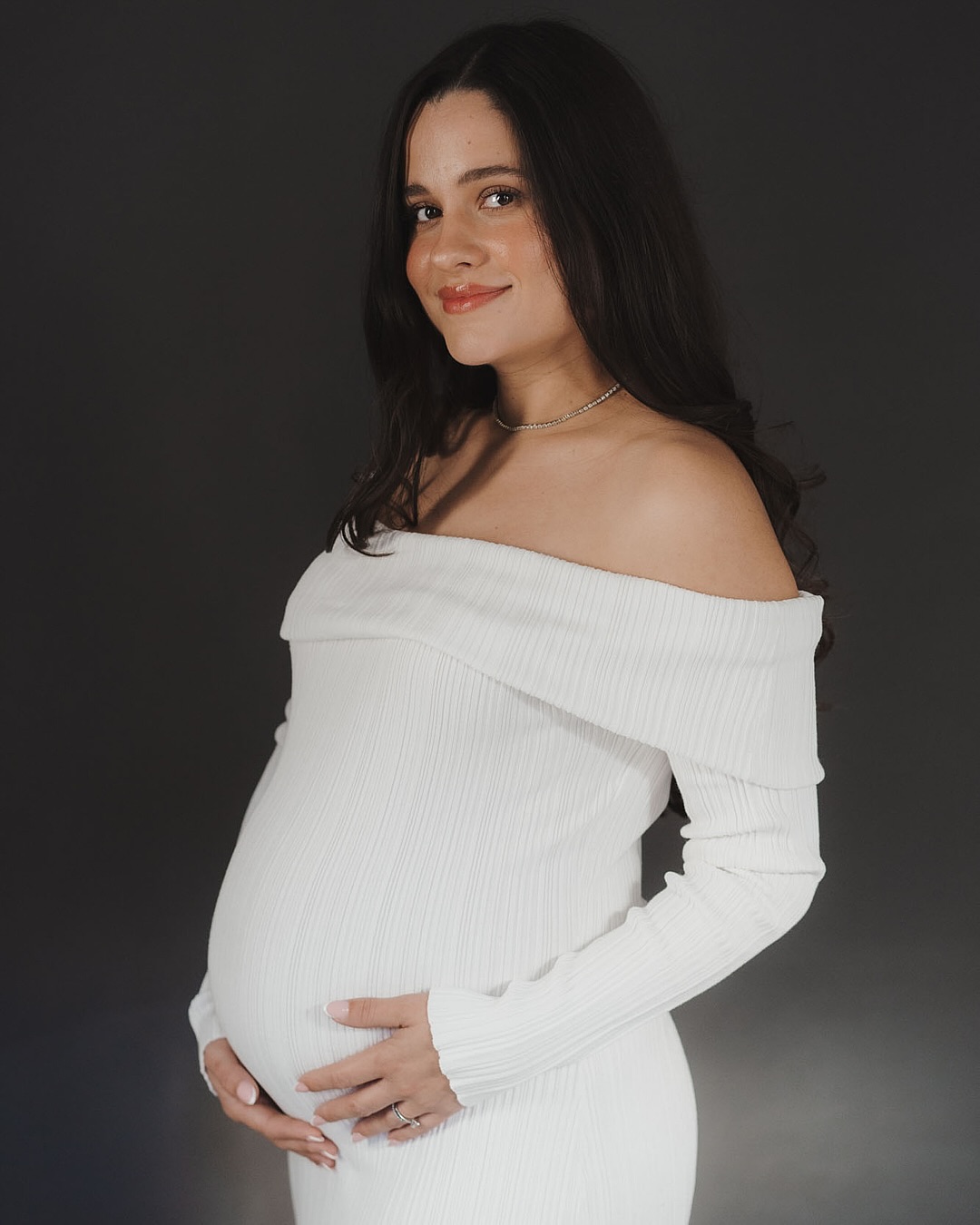
"If you ask me my favorite recipe for a pregnancy photo, I'll say it has a few ingredients: sunlight coming through the window in my studio, a white backdrop, and plain clothes with no unnecessary detail." — Tami (Wonderstory)
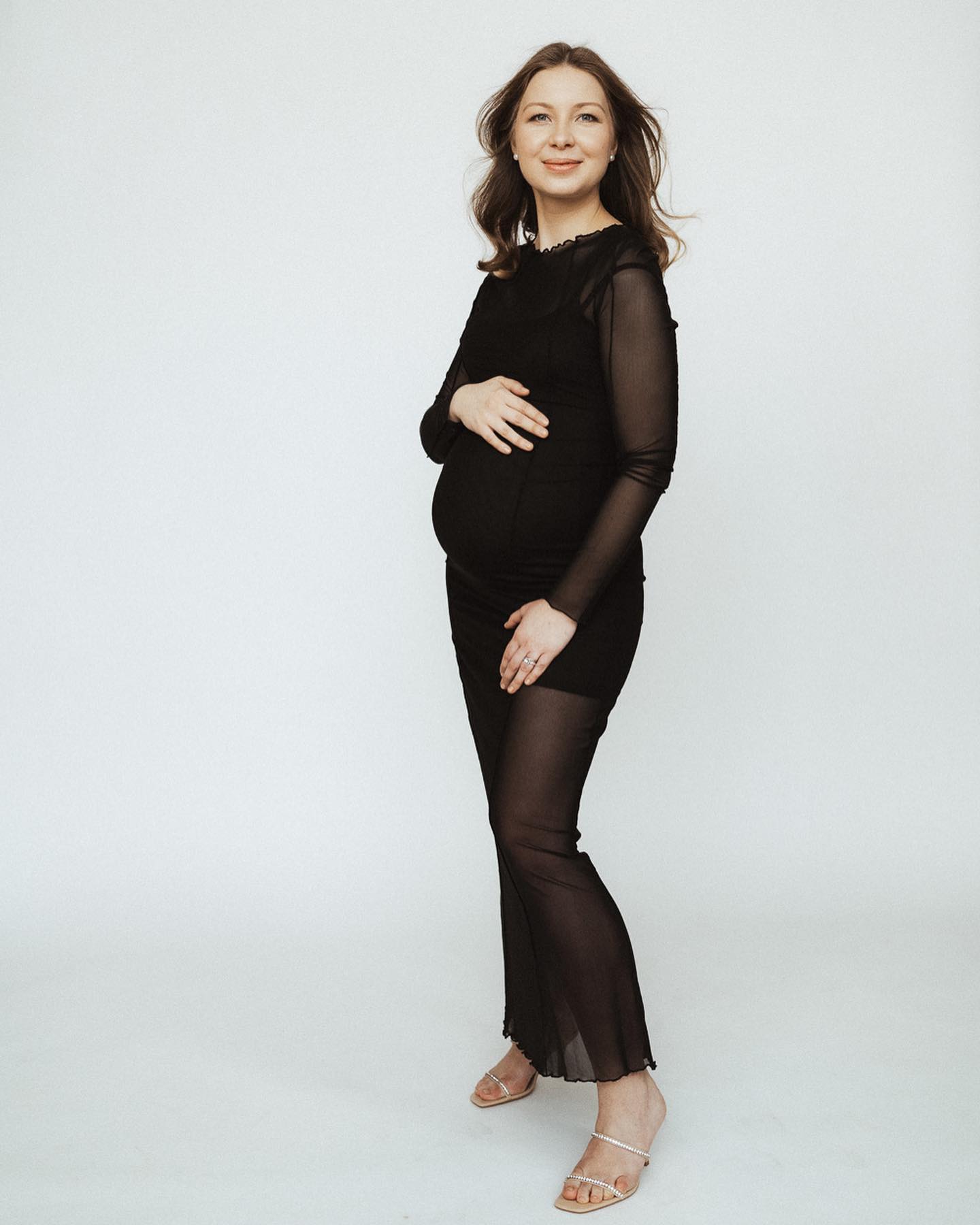
If you want to see what a session looks like end-to-end, here's what a maternity photo session at a studio in Barcelona is really like — useful to picture things before deciding.
Beach: Barceloneta, Bogatell, Sitges, Castelldefels
The beach calls for long dresses and a lot of breeze. If the fabric doesn't move, half the point is lost.
- What works: a maxi dress with an empire cut (fitted under the bust, flowing below), mid-weight chiffon or linen, barefoot at the shoreline. An oversized linen shirt open over a dark bralette also looks great.
- Careful with very thin fabrics: the lightest ones cling to the body or fly out of control. Mid-weight chiffon is more reliable.
- Palette: ecru, off-white, beige at sunset; or jewel tones — burgundy, emerald, terracotta — that catch the warm sea light at the end of the day.
- What fails: pure white in direct sun, heels (impossible on sand), and synthetic fabrics that trap heat in summer.
For more outdoor inspiration, take a look at maternity photography around the world — concrete cases of outdoor light and movement.
Forest or natural outdoor: Collserola, Tibidabo, Garraf
Here the clothes share the frame with the landscape, so the palette adjusts to what's behind you.
- Earth tones: terracotta, mustard, olive, burgundy, moss green. They sit well with the vegetation; neon or electric pastels fight the green.
- Textures: chunky knit, wool, corduroy, or lace in fall and winter. Linen and flowing cotton in spring and summer.
- Footwear: flat sandals, mules, or barefoot in clean spots. Bring a separate pair of trail or running shoes for the walk in — Collserola and Garraf have slopes, roots, and dusty paths. Stilettos here are punishment, plus a real risk.
- Visual trick: an elegant gala dress against a rustic landscape creates strong contrast. You don't have to dress "forest-y."
- By season: spring and summer call for light earth colors that pop against bright green. Fall is the moment for warm palettes. In winter, layer up — a chunky cardigan or wool coat over the dress adds visual depth.
Home (lifestyle)
A home session is about capturing your routine, not dressing up. The clothes have to look like yours — ideally, because they are.
- What works: cotton, linen, knit. Maternity jeans with an elastic waist and a plain top. An oversized men's shirt slipping off the shoulder. A soft blanket wrapping the bump over basic lingerie. A bralette visible under an open shirt looks curated but natural.
- Palette: neutrals and light tones. The home setting already brings warmth — no need for saturation.
- What fails: real pajamas (read as careless) and big prints that fight the sofa or the living room curtain.
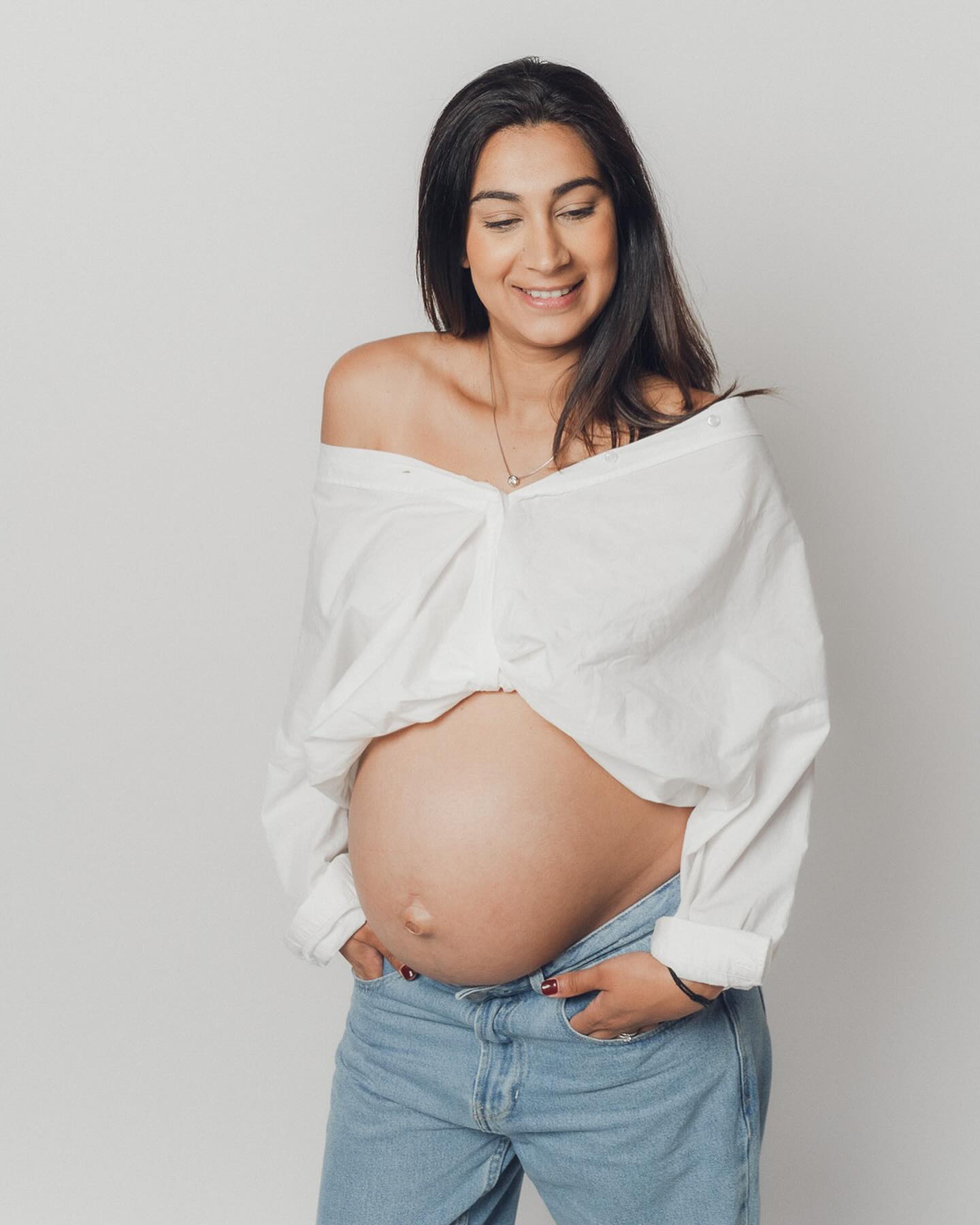
"You probably already have something in your closet that works perfectly. And don't worry about the jeans: you don't have to button them — leave them open and they look great on camera." — Tami (Wonderstory)
What NOT to wear (with the technical reason)
The "what" of the clothes for a maternity photoshoot changes by format, but the "how" is always the same: defined silhouette, plain fabrics, nothing you have to tug on every five minutes. These are the mistakes I see most, and why the camera punishes them.
- Tiny dense prints — fine stripes, gingham, small dots, fine ribbed fabric. They cause a moiré effect by clashing with the sensor's antialiasing filter: false waves and patterns appear that can't be retouched. Solid colors or large prints work better.
- Pure white outdoors in direct sun — blows out the dynamic range, and the dress reads as a flat blob without folds. Swap for off-white, ivory, or cream.
- Logos, brand names, and text — they date the photo within five years and steal focus from your face.
- Neon or electric colors — the eye goes to the color, not to you.
- Fully loose dresses with no cut under the bust — they hide the bump instead of marking it.
- A cap with a visor — hard shadows on the face.
- Neon or heavily worn sneakers — feet show up in more shots than you'd think.
- Elastics, socks, watches, and sports bras in the 12-14 hours before — swollen skin holds the marks for up to five hours. Take them off the night before, not 30 minutes before.
What do I wear underneath? (the foundation no one talks about)
This is the part most "what to wear" guides for a maternity photoshoot skip — and it's the part that changes the final result the most. A clean silhouette depends as much on what's underneath as on the dress itself.
- Seamless lingerie (or laser-cut maternity) in nude, white, and black. Stops visible lines from showing through a fitted dress.
- High-waisted briefs for very fitted dresses — no underwear line on the bump. For flowy beach dresses, a seamless thong works better.
- Slightly looser than usual. Counterintuitive trick: underwear that's too tight creates dents and bumps that show through the fabric. A comfortable size gives cleaner skin.
- Bring all three colors — nude, white, black — so you have options based on transparency and dress color.
- A well-fitted strapless bra, or silicone nipple covers, for off-shoulder dresses and sheer tulle.
- Smooth maternity shapewear — optional, but useful if the session is outdoors with quick outfit changes. It smooths the line and speeds up swaps.
- Arrive at the studio in loose clothes. Oversized sweatshirt, sweatpants. Tight clothes during the trip leave red marks that take at least 30 minutes to fade.
And your partner — what does he wear?
Most couples coming to the studio in the Eixample arrive with the question doubled: what does she wear, what does he wear? The basic rule is the same for both — coordinate, don't copy.
- Anti-pattern: "twinning" — both dressed exactly the same. White shirt + blue jeans on both sides of the frame gives a flat, forced photo that looks like a 90s photo studio.
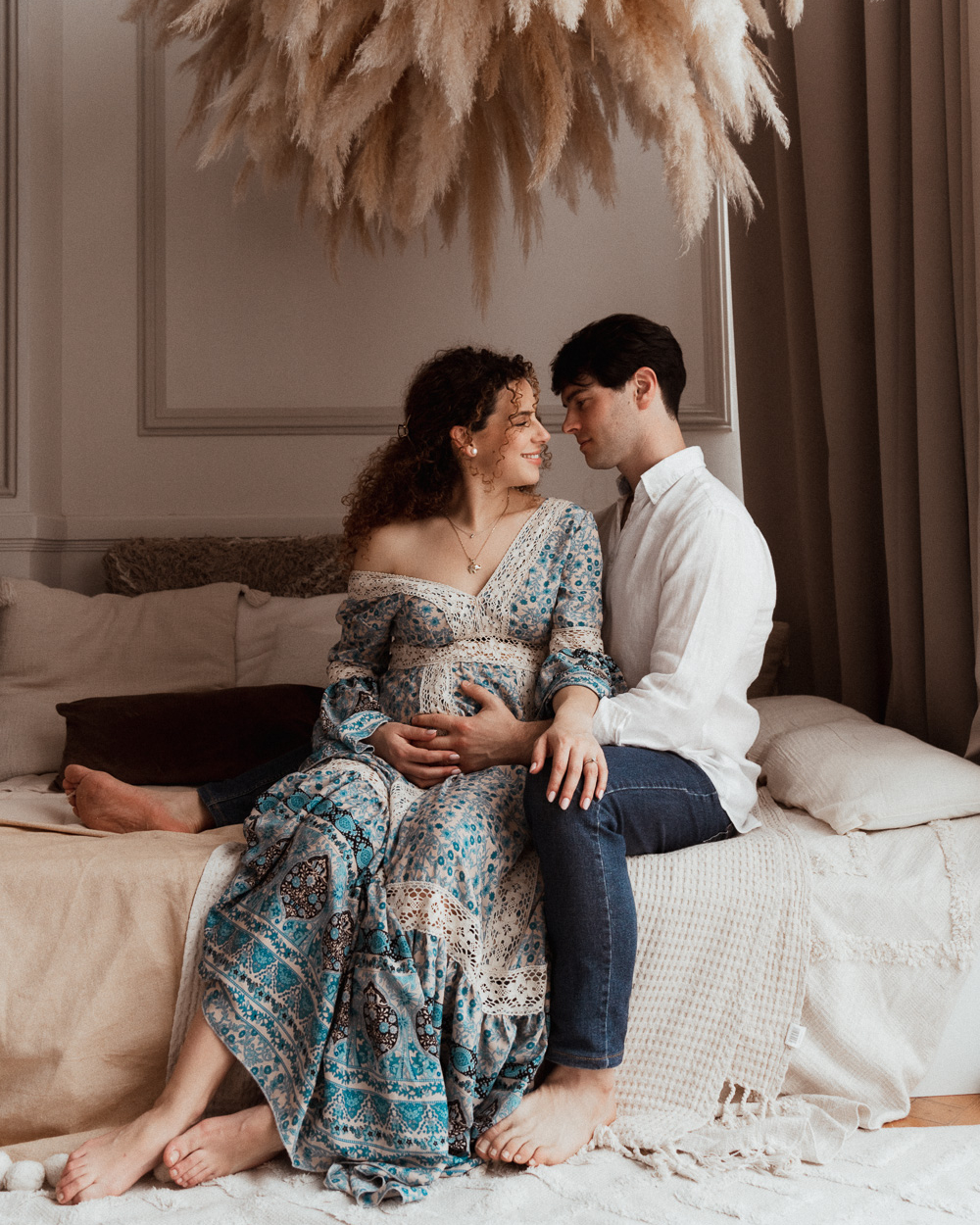
- What works: a shared palette of three or four complementary tones. If you wear terracotta, he goes in olive, tan, or navy. Not identical, but in the same color family.
- Same level of formality on both sides. If your dress is elegant, no hoodie for him. If you're casual in jeans, he's not in a suit. The level of care has to match.
- His most timeless look — a linen shirt with no tie, a fine knit sweater, or a jacket without a tie. Skip loud prints and chest logos. Same principle as you: plain wins.
The partner has his own role in the frame — coordinated, not identical, and always at the same level of care as you.
Plan B: the night before and the studio's wardrobe
Sometimes you reach the session week with a full closet and nothing that works. Very normal — the body changes week by week, and a piece that fit two months ago doesn't anymore.
If your closet is empty
- The studio has clothes too. Ask me when you book what's available: long dresses, robes, drapeable fabrics, a few tulle pieces.
- Useful Spanish brands for a single session: Zara Mum (dresses around 46€), Mango Maternity (40-50€), H&M MAMA (tops from 6€, jeans 30-40€), ASOS Maternity online with good chiffon for the beach (20-60€). For something more shoot-specific, Attesa Maternity has dresses with trains for 60-120€.
- Plan B during the session: improvise with fabric. Tulle, linen, an open robe over lingerie — these get results very different from a regular dress.
"In my studio I also have options we can use." — Tami (Wonderstory)
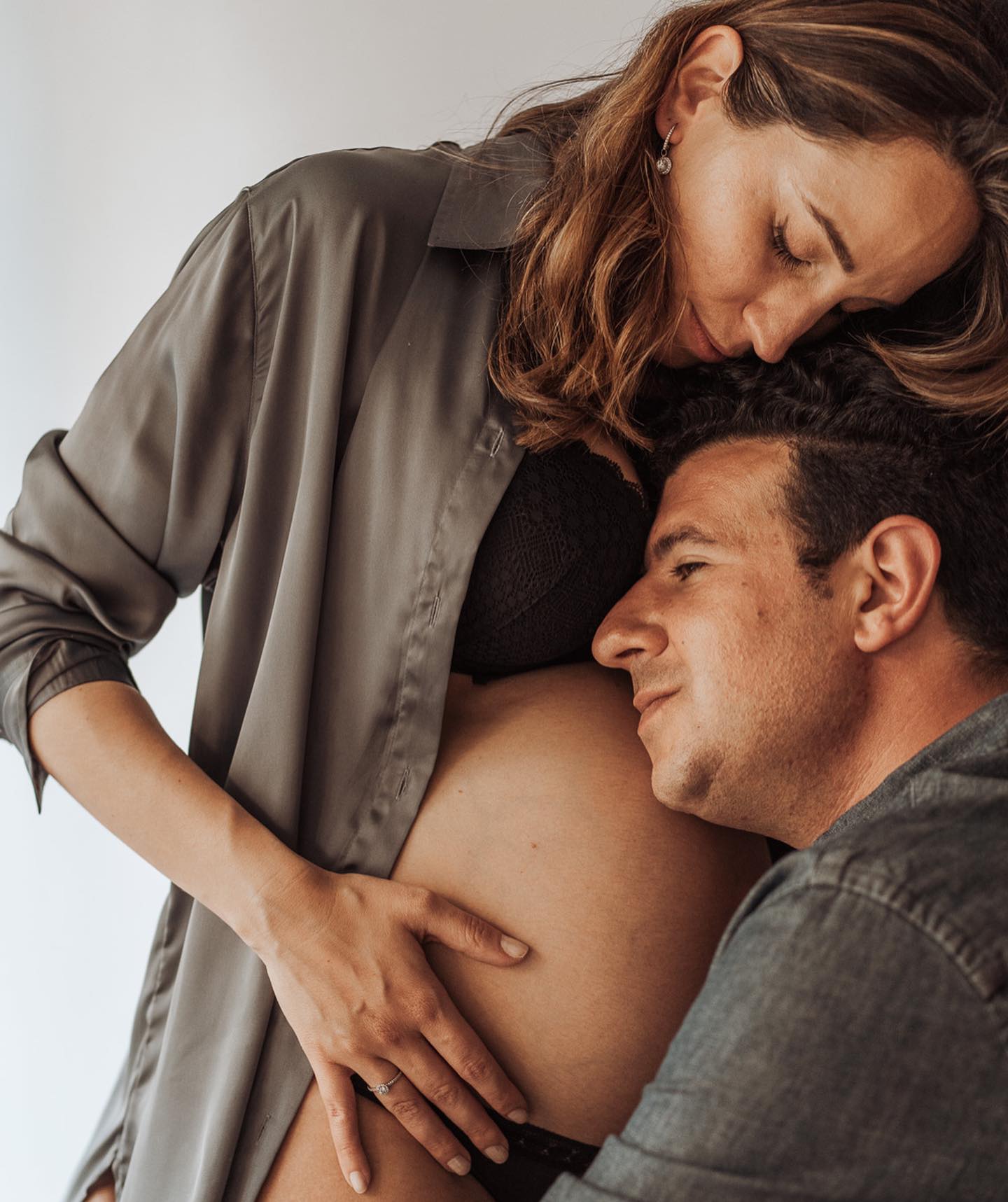
As Verónica says in her Google review:
"She's a great artist, she helps you from before the session with outfits, and during the session she also improvises — even with a piece of fabric. The result? Brutal." — Verónica, Wonderstory client
The night before — practical
- Skin: water-based moisturizer, no oils — oils stain chiffon and silk.
- Elastics, socks, watches, sports bra: off at least 12-14 hours before.
- Hair: wash it the night before, not the day of. "Second-day" hair holds volume better, especially with a bit of texture spray. For windy outdoor shoots, natural waves survive better than a tight ponytail.
- Nails: neutral palette — nude, milky white, transparent pink. Hand-on-bump shots are key; an intense red there adds noise.
The day-of bag
- Water (at least 1 liter) and a snack — the session runs long.
- Blotting papers for facial shine.
- Cardigan or jacket for the transit — the coast and Collserola viewpoints catch 15-20 km/h winds in spring.
- Comfortable walking shoes for transit, plus the camera-ready pair separately (or a clear decision to go barefoot).
How to start preparing your session
If you decide the format first, the rest gets simple — and you can always check my 40 maternity looks with brand and price before going shopping, no commitment. The outfit is something we work on together, so you don't need to arrive with everything figured out.
If you want to see how I walk you through it, from picking the clothes to the day of the shoot, here's how I work in my maternity photoshoot at the studio in central Barcelona. And if you still haven't decided when to book, this post on the best time for pregnancy photos, week by week is usually the next step.
Tami · Photographer and founder of Wonderstory
I opened my studio in central Barcelona back in 2019. Since then, my work has been mostly maternity, newborn, and family sessions — that's where I'm at home.